
Fill Chairs in One Week with a Barber Referral Program That Scales
Fill Chairs in One Week with a Barber Referral Program That Scales
The best barber referral program pays both sides: a service credit for the client who refers, and a discount or free add-on for the friend who books. That’s the whole formula. Your next move is simpler than it sounds. Write a one-sentence offer today, then add a “referred by” field or unique link to your booking flow before the week is out.
TL;DR:
- Dual-sided rewards with service credits and discounts outperform one-sided offers by encouraging both the referrer and the new client to act.
- Launching a simple referral program requires five decisions, a clear one-sentence offer, and consistent asking through chairside, texts, and emails.
- Service credits that encourage rebooking are more effective than cash discounts, especially for shops with average tickets under $50, where loyalty points or add-ons work well.
- Tracking can be manual for small shops or automated with referral links and dashboards, with automation becoming necessary as referral volume increases.
- Clear, honest marketing with straightforward rules and a single, memorable message prevents program confusion and increases long-term success.
Table of Contents
- What Is the Best Referral Model for a Barbershop?
- How Do You Launch a Barber Referral Program in a Week?
- What Should You Actually Offer as a Reward?
- When and How Should You Ask for Referrals?
- Manual, Semi-Automated, or Fully Automated: Which Tracking Fits Your Shop?
- How Do You Know If Your Referral Program Is Working?
- What Legal Rules Apply to Barber Referral Programs?
- Practitioner Perspective: What Actually Breaks Referral Programs
- How Exclusively Turns Referrals Into Automated Bookings
- Sources
What Is the Best Referral Model for a Barbershop?
Dual-sided, or “give and get,” rewards outperform one-sided offers because both people have a reason to act, not just one. Multiple industry guides and vendor case studies point to give-and-get structures as the strongest converters, and Aveda’s own network runs a “25/20” variant: the referring client earns a larger retail credit, while the new guest gets a service discount. That split protects your margin on labor while still moving product off the shelf.
A few variations work depending on your shop’s price point and clientele:
- Dual-sided service credit: referrer gets a moderate service credit off their next cut, new client gets a matching discount or a free add-on like a beard trim.
- Aveda-style 25/20 split: referrer earns retail credit, new client earns a service discount, useful if you sell product lines.
- Tiered milestones: one referral earns a free add-on, three referrals earn a free haircut, which builds a small cohort of repeat advocates without inflating your average payout.
- Loyalty-point bridge: for lower-ticket shops, points stack toward a future service instead of a flat dollar reward, which keeps cash outlay near zero.
Pick one model, not three. Barbers who stack every option at once tend to confuse clients and dilute the ask.
How Do You Launch a Barber Referral Program in a Week?
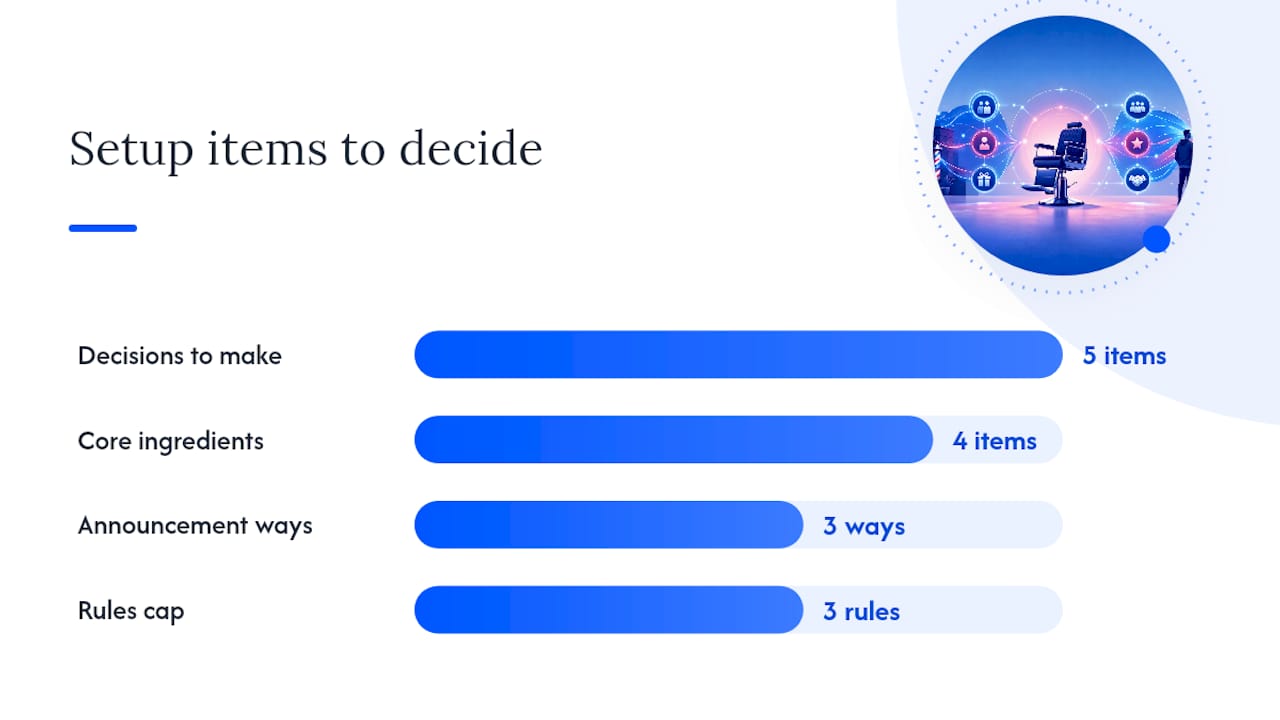
You don’t need software, a marketing budget, or a committee meeting. You need five decisions, made once, and a habit of asking.
- Write the offer in one sentence. “Refer a friend, you both get $15 off your next visit.” Cap it at three rules: who qualifies, what they get, and when it pays out.
- Set the reward and the trigger. Pay out only after the new client completes their first visit, not when they book, so no-shows don’t cost you.
- Pick one sharing channel. A printed card, a unique link, or a text template. Pick the one your staff will actually remember to use.
- Add a tracking field. A “referred by” box in your booking form or a dedicated column in a spreadsheet is enough to start.
- Announce it three ways. Mention it chairside, drop it into booking confirmation texts, and send one launch SMS or email to your existing client list.
Pro Tip: Role-play the chairside ask with your staff before launch. A script read off a card sounds robotic; a script practiced twice sounds like a normal conversation, and that’s the difference between a referral program that works and one that gets forgotten by week two.
Practitioner guides confirm that four ingredients are enough for small shops: a clear offer, a two-sided reward, a moment to ask, and a simple way to track it. Software becomes worth the switch only once volume outpaces your spreadsheet.
What Should You Actually Offer as a Reward?
Service credits beat straight cash discounts for one reason: they force a rebooking instead of paying out and hoping. A service credit functions like prepaid future revenue, which means the client comes back sooner and you recapture part of the cost through the visit itself. For mid-tier tickets, $15 to $25 in service credit tends to hit the sweet spot between motivating and giving away the margin. If your average ticket runs under $50, skip flat-dollar discounts entirely and shift to a free add-on or loyalty points, which protects your bottom line while still feeling generous.
Three templates you can copy today:
- “Refer a friend, you both get $20 off your next cut.” (mid-tier shops, $40 to $60 average ticket)
- “Send a friend our way. They get a free beard trim, you get a free one too.” (lower-ticket shops or teams building loyalty)
- “Three referrals, one free haircut on us.” (tiered model for your most loyal clients)
Here’s the break-even math on a $20 credit: if your average ticket is $45 and a referred client typically books two visits in the first quarter, that one referral generates roughly $90 in revenue against a $20 cost. Even a modest referral rate covers its own reward several times over.
When and How Should You Ask for Referrals?
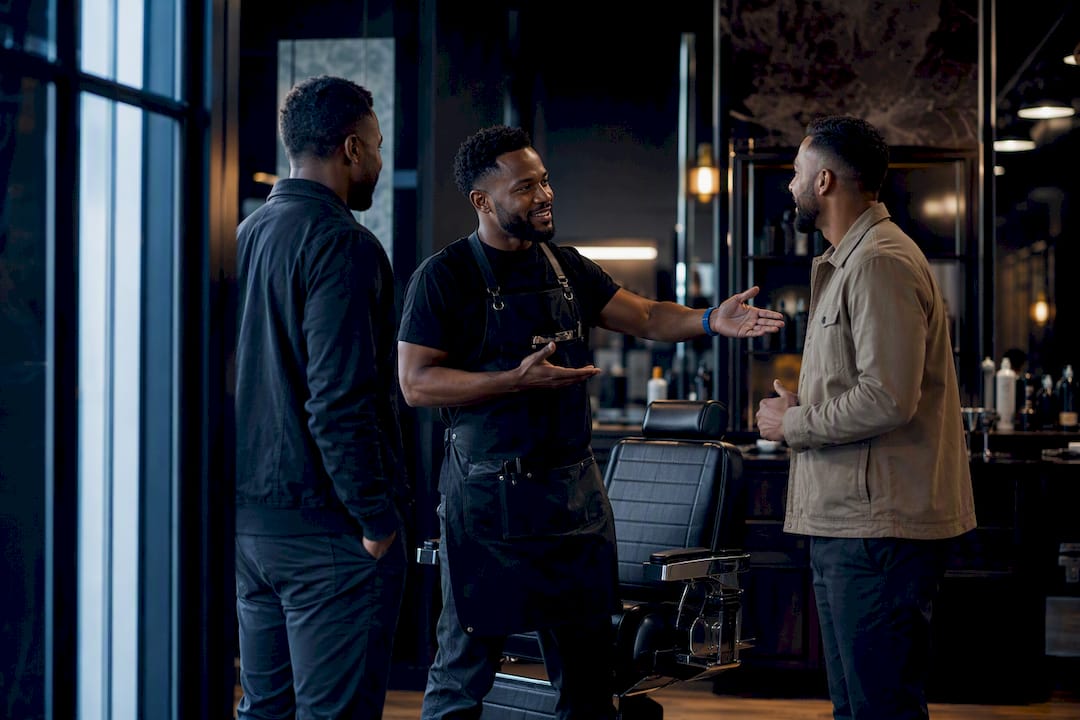
Ask at the mirror, right after you’ve shown the client the finished cut. That’s the “mirror moment,” the single highest-conviction second in the entire appointment, because the client is looking at proof your work is worth talking about.
Two scripts that work without sounding scripted:
- Casual shop: “Hey, if you’ve got a buddy who needs a cut, send them my way. You both get $15 off.”
- Premium shop: “If you know someone who’d appreciate this level of detail, I’d love to take care of them too. There’s a referral credit in it for both of you.”
Timing matters beyond the chair. Automated systems that time a referral SMS around day 20 after a visit catch clients right when they’re mentally lining up their next appointment, which tends to lift share rates versus a generic monthly blast. For shops without automation, an immediate post-visit text works nearly as well. Round it out with low-cost materials: printed referral cards, a QR code sticker at the register, and a line of referral copy baked into every booking confirmation.
Manual, Semi-Automated, or Fully Automated: Which Tracking Fits Your Shop?
The right tracking setup depends entirely on how many referrals you’re processing each month, not on what looks impressive.
A manual stack, meaning a “referred_by” field in your booking system plus a spreadsheet, is genuinely sufficient for most shops with two to eight chairs. The tradeoff is admin time: someone has to remember to check the field and update the sheet weekly.
Semi-automated setups use unique codes or printed cards with a code on them. They’re a step up in structure but still rely on someone typing the code in manually, which means occasional misattribution when a client forgets their code or a staff member skips a field.
Fully automated systems send a unique referral link by SMS and track clicks straight through to booked and completed visits. Dashboards built for this show referral trees, click-to-visit ratios, and your top referrers at a glance, which lets you single out your best advocates for extra perks instead of guessing who’s actually sending business your way.
- Manual: booking field or spreadsheet, near-zero cost, best for low referral volume.
- Semi-automated: printed codes or digital cards, moderate accuracy, some manual entry still required.
- Automated: SMS and unique links, full attribution, reward flows can trigger without staff intervention.
The moment your weekly “who referred whom” cleanup starts eating more time than the referrals are worth, that’s the signal to move up a tier, not a preference.
This is exactly where Exclusively’s booking system fits the automated tier: branded links tied to each client, credits that apply automatically at checkout, and payments handled through integrated Square processing without a separate app or spreadsheet in the loop.
How Do You Know If Your Referral Program Is Working?
Track five numbers, not fifty. Referrals sent, referrals completed (meaning the new client actually showed up), your conversion rate between the two, cost per acquisition compared to what you’d pay for ads, and the rebook rate of referred clients specifically. That last one tends to run higher than average, since a referred client already trusts the recommendation before they sit down.
Keep the routine light:
- Weekly (10 minutes): update the referral column, flag which rewards are owed.
- Monthly: compare total reward cost against the lifetime value those new clients are generating.
- Quarterly: decide whether to raise the reward, lower it, or switch channels based on what the numbers say.
Barber-specific guides suggest giving a new program six to eight weeks before judging results, since word of mouth needs a few booking cycles to build momentum. If referrals are flat after two months, the ask or the channel is the problem, not the concept.
What Legal Rules Apply to Barber Referral Programs?
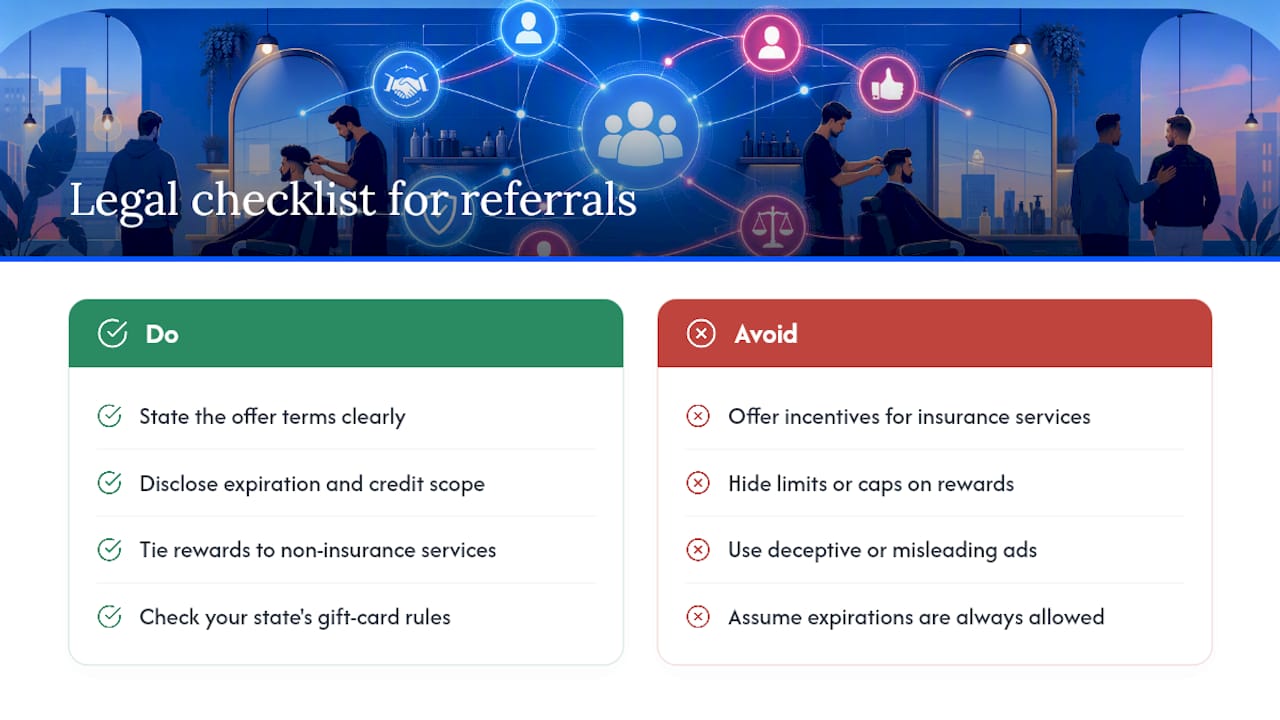
Referral programs are legal and common practice, but a few compliance points are worth knowing before you launch one, especially if your shop touches insurance-billed services or operates in a state with specific consumer-protection rules around discounts and gift cards.
First, be transparent about the offer’s terms. Advertise the actual reward, any expiration date on the credit, and whether it applies to services only or includes retail. States generally require gift-card-style credits to remain valid for a minimum period, so check your state’s rules before setting an expiration on service credits, since some jurisdictions restrict or ban expiration dates entirely.
Second, if your shop accepts any insurance-adjacent services (uncommon for barbers, but relevant for combined barber-medspa operations), referral incentives tied to those services can run into anti-kickback restrictions that don’t apply to standard grooming services. Keep referral rewards strictly tied to non-insurance services to stay clear of that issue entirely.
Third, be honest in your marketing. If you say “refer a friend, get $20,” don’t quietly cap it at the first ten referrals without saying so upfront. Deceptive advertising rules apply to small businesses the same as large ones, and a client who feels misled about a promised reward tends to leave a public review about it.
None of this requires a lawyer for a standard service-credit referral program. It requires clear terms, honest advertising, and a quick check of your state’s gift-card and credit-expiration rules before you finalize the offer.
Practitioner Perspective: What Actually Breaks Referral Programs
Most referral programs fail from complexity, not lack of interest. Shops that launch three offers across two channels with different rules for each rarely see a single one take off; the staff can’t remember the details, so they stop mentioning it. One offer, one channel, one sentence your whole team can say without looking at a card works better every time. Seed it with your five most loyal clients first, and use service credit over cash. It rebuilds your own revenue while it rewards theirs.
— Service
How Exclusively Turns Referrals Into Automated Bookings
Everything covered above, the tracking field, the unique link, the reward that applies without a staff member remembering to type in a code, is exactly what Exclusively’s branded platform is built to handle.
Instead of juggling a spreadsheet, a separate booking app, and a payment processor, Exclusively gives your shop a branded website and mobile app where referral links, provider-level pricing control, and reward redemption all live under your own name, not a third-party logo. Payments run through integrated Square processing, so a service credit applies automatically at checkout instead of requiring a manual discount entry. That closes the exact gap between manual tracking and full automation this article just walked through: you get the attribution accuracy of a dashboard without losing the branded, client-facing polish of your own shop identity. Compare the setup against other platforms on the pricing page, or see how it stacks up directly on the Exclusively vs. SQUIRE comparison before you decide where your referral program lives next.
Sources
- The Salon Brief: How to start a salon referral program
- Spokk: Barbershop referral program
- Aveda: grow referrals
- National Barbers: how to attract new customers