
What a Barbershop Haircut Actually Costs in 2026
What a Barbershop Haircut Actually Costs in 2026
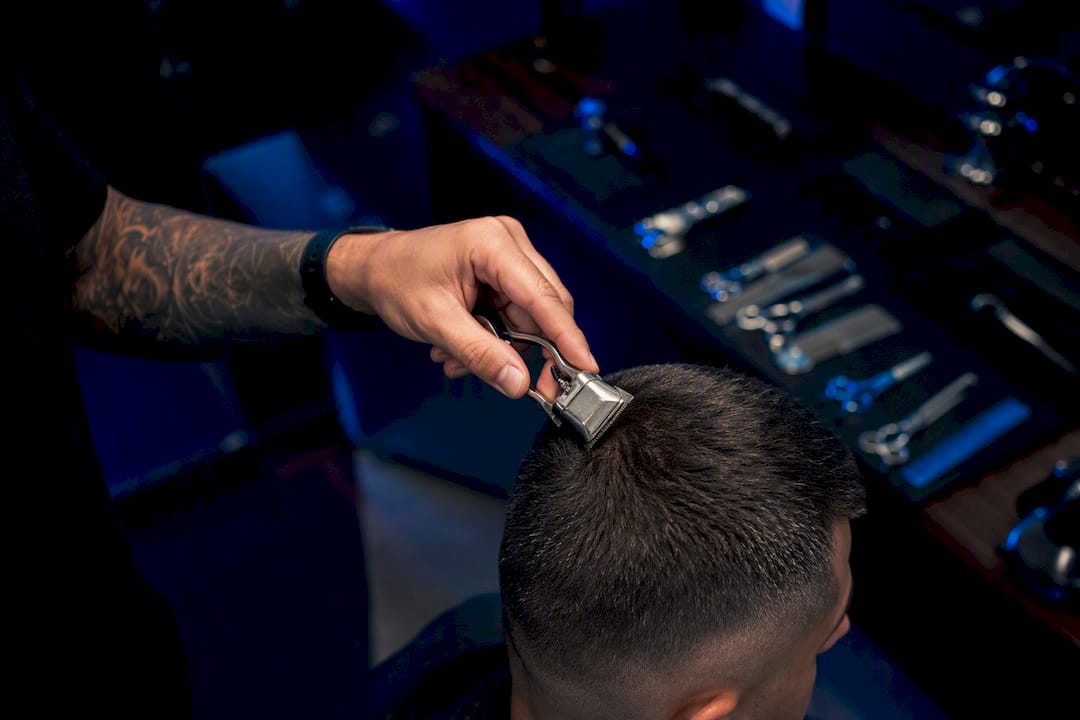
A standard adult men’s haircut at a barbershop typically runs in the mid-to-high $30s in most major U.S. cities, with a typical price near that range before tip. That price typically covers a consultation, a clipper or scissor cut, styling, and a neck cleanup with a trimmer or straight razor.
Budget chains and no-frills shops still get you a serviceable cut at lower price points. Premium grooming lounges, especially in coastal metros, can charge substantially more when adding services like a hot towel, shampoo, and a straight-razor finish. Tipping around 15% to 20% is standard practice.
- Standard barbershop cut: $35–$45 (median ≈ $39)
- Budget chain cut: $15–$25
- Premium lounge or full-service package: $60–$100+
- Tip: 15–20% of the pre-tip total
- Pay more when the shop includes shampoo, hot towel, or a specialist known for fades and design work
Key Takeaways
Barbershop pricing runs $35 to $45 for a standard adult cut in major cities, and the biggest driver of a fair price is what’s included, not just the number on the menu.
| Point | Details |
|---|---|
| Know the benchmark | A standard adult haircut in major U.S. cities averages about $38.52, typically landing between $35 and $45. |
| Expect regional swings | Coastal and metro markets often run $50, while rural and interior areas commonly land $10–$15 lower. |
| Budget for the tip | Standard tipping is 15–20%, adding roughly $6–$8 to a $40 haircut. |
| Watch for add-on fees | Walk-in surcharges, rush fees, and cancellation fees can add $5–$25 beyond the base price. |
| Choose transparency | Platforms like Getexclusively let barbershops publish provider-level pricing and menus so clients see the full cost before booking. |
Table of Contents
- Barbershop Pricing Guide: Average Ranges by City and State
- What Actually Drives Barbershop Service Prices?
- How Much Do Specific Barber Services Typically Cost?
- How Do You Know If a Barbershop Price Is Fair?
- What’s the Real Out-the-Door Cost, Including Tip?
- How Transparent Pricing Menus Prevent Surprise Charges
- Do Barbershop Prices Change by Season?
- How Do You Read a Barbershop Pricing Menu Correctly?
- How Does Barbershop Pricing Vary Outside Major Cities?
- What Extra Fees Should You Watch For Beyond the Base Price?
- Frequently Asked Questions
- Sources
Barbershop Pricing Guide: Average Ranges by City and State
The most useful reference point comes from a Haircut Now pricing study, which found average posted adult haircut prices across major U.S. cities tend to cluster in a range from the low $30s to mid $40s. That’s a tighter band than a lot of people assume, and it holds up as a solid mental benchmark whether you’re in Denver or Chicago.
The $38.52 benchmark: Use this figure as your starting point. If your local shop quotes anywhere from $30 to $48, you’re paying a normal market rate, not getting overcharged.
Zoom out to the national level and the range widens. Yelp’s cost data shows typical men’s haircuts landing around $25 to $35 in many parts of the country, with city-level extremes stretching from about $10 up to nearly $100 depending on the market and the service booked. State-by-state breakdowns tell a similar story: coastal and tourist-heavy states often average $55 or more, while several interior states sit under $30.
| Market Type | Typical Range | Example |
|---|---|---|
| Interior/rural states | $20–$30 | Rural Midwest shops |
| National average | $25–$35 | Yelp nationwide data |
| Major-city average | $35–$45 | $38.52 median across major cities |
| Coastal/tourist metro | $50 | High-demand urban centers |
Kids’ cuts usually undercut the adult price by $5 to $10, while specialty services at premium lounges (think scissor-only cuts with a design and a full shave) can blow past $100 in high-cost cities. Rent is the biggest reason for the spread. A shop paying Manhattan or San Francisco commercial rates has to charge more per chair just to break even.
What Actually Drives Barbershop Service Prices?
Two shops three blocks apart can charge $15 apart for what looks like the same cut, and it’s rarely random. A few factors do almost all the work.
- Location and rent. A shop in a strip mall pays a fraction of what a downtown storefront pays, and that overhead shows up directly in the price of every chair.
- Barber experience and seniority. Many shops run tiered pricing, where a junior barber charges $10 to $15 less than a master barber with 10+ years and a waitlist.
- Time per service. A precision fade with line work takes 30 to 45 minutes; a basic clipper cut takes 15. Time is the input barbers can’t fake.
- Service complexity. Scissor work, tapers, skin fades, and custom designs all demand more skill and attention than a straightforward buzz.
- Shop model. Walk-in chains optimize for volume and speed. Independent barbershops price for craftsmanship and repeat relationships. Premium lounges add amenities like beverages, hot towels, and private stations, and price accordingly.
Pricing guidance aimed at shop owners backs this up directly. Squire’s guide to barbershop pricing recommends setting prices from three inputs: fixed operating costs, what the local market will tolerate, and the time and skill each barber brings to a chair. That’s the formula behind almost every price tag you’ll ever see on a barbershop menu.
Pro Tip: If a shop’s pricing seems oddly high for the neighborhood, ask if it includes a hot towel, shampoo, or extended consultation. Sometimes the number reflects real added value; sometimes it just reflects rent.
How Much Do Specific Barber Services Typically Cost?
Menu pricing gets confusing fast because shops bundle, upcharge, and rename the same basic services. Here’s how the typical menu breaks down.
- Basic haircut (clipper only): $20–$35, roughly 15–20 minutes.
- Haircut with fade or taper: $30–$50, roughly 25–40 minutes. Fades commonly add $10 to $20 over a base cut because of the extra blending time and skill involved.
- Beard trim (standalone): $15–$25, roughly 10–15 minutes.
- Hot towel shave: $25–$45, roughly 20–30 minutes.
- Haircut plus beard combo: $40–$60, priced below the sum of the two individual services.
- Full grooming package (cut, beard, shave, hot towel): $60–$100+.
| Service | Typical Price Range | Approx. Time |
|---|---|---|
| Basic clipper cut | $20–$35 | 15–20 min |
| Fade or skin fade | $30–$50 | 25–40 min |
| Beard trim only | $15–$25 | 10–15 min |
| Hot towel shave | $25–$45 | 20–30 min |
| Cut + beard combo | $40–$60 | 30–45 min |
Combos come in cheaper than booking the same two services separately because the shop reuses prep and cleanup time between them, the same neck shave, the same towel work. A shop that charges $35 for a cut and $20 for a beard trim might list the combo at $48 instead of $55. That’s not a discount out of generosity. It’s the barber saving 10 minutes of setup and passing part of that savings to you.
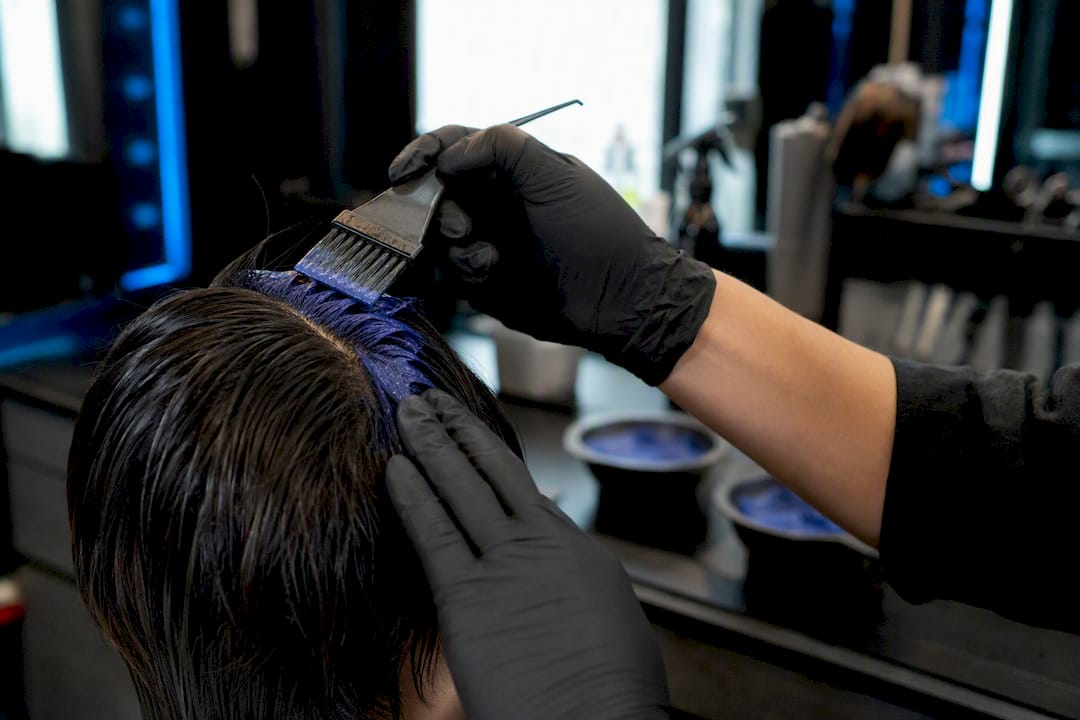
Specialty services change the math entirely. Color, perms, and braiding work require different tools, longer chair time, and often a separate consultation. Expect those to run well above standard cut pricing, sometimes double or triple, since they’re priced more like salon services than barbershop basics.
How Do You Know If a Barbershop Price Is Fair?
A fair price isn’t the lowest one. It’s the one that matches what you’re actually getting. Run through this before booking somewhere new:
- Check what’s included. Does the quoted price cover shampoo, styling, and a straight-razor neckline, or just the clipper work?
- Confirm barber seniority. A master barber’s $10 upcharge is often the whole reason your fade looks sharp for three weeks instead of one.
- Look at the portfolio and reviews. Real photos of fades and lineups tell you more than a star rating ever will.
- See if pricing is posted clearly. Shops that publish starting prices per service upfront, including senior-barber upcharges, tend to run fewer awkward surprises at checkout.
- Ask about walk-in versus appointment pricing. Some shops charge differently depending on how you book.
- Ask about cancellation fees before you commit to a recurring slot.
Three red flags worth asking about before you sit down: no posted price for the specific cut you want, a shop that won’t confirm which barber you’re getting, and vague answers about add-on charges. If a new shop looks promising but you’re not sure, book the basic cut first. Skip the beard trim and hot towel until you know the barber’s work holds up.
Pro Tip: Test a new barber with your simplest, most forgiving cut. Save the complicated fade or design for someone whose work you’ve already seen in person.
What’s the Real Out-the-Door Cost, Including Tip?
Standard tipping etiquette in barbershops sits at 15% to 20%, the same range you’d tip at a sit-down restaurant. On a $25 cut, that’s $3.75 to $5. On a $40 cut, $6 to $8. On a $60 full-service visit, $9 to $12.
- $25 haircut → $28.75–$30 total
- $40 haircut → $46–$48 total
- $60 combo/package → $69–$72 total
Monthly cost depends heavily on how often you go. Guys who cut every two weeks are looking at two visits a month; guys stretching to six weeks get closer to one visit every six weeks. Tip a little higher, 20% or more, when a barber does exceptional work on a combo service or squeezes you in on short notice.
How Transparent Pricing Menus Prevent Surprise Charges
The single biggest complaint about barbershop pricing isn’t the dollar amount. It’s not knowing the amount until you’re already in the chair. Shops that publish clear, provider-level pricing online solve that problem before you ever walk in.
A well-built booking platform typically shows you:
- Exact prices per service, not just a vague “starting at” number
- Which specific barber you’re booking and their rate, if the shop runs tiered pricing
- Add-ons priced separately so you can opt in or skip them
- A booking confirmation that locks in the price before you arrive
Getexclusively’s branded barbershop websites are built around exactly this idea: each shop publishes its own menu with real prices tied to each barber, so clients see the actual cost before booking rather than guessing at checkout. That’s one example of how the technology behind a shop’s website can remove pricing ambiguity. It’s not the only way to get transparency, but it’s a clear signal a shop takes it seriously.
Do Barbershop Prices Change by Season?
Yes, and the pattern is fairly predictable. Demand spikes around the holidays (late November through December), before prom and graduation season in the spring, and heading into summer when people want lighter, cleaner cuts. Shops in college towns see a similar spike right before the fall semester starts.
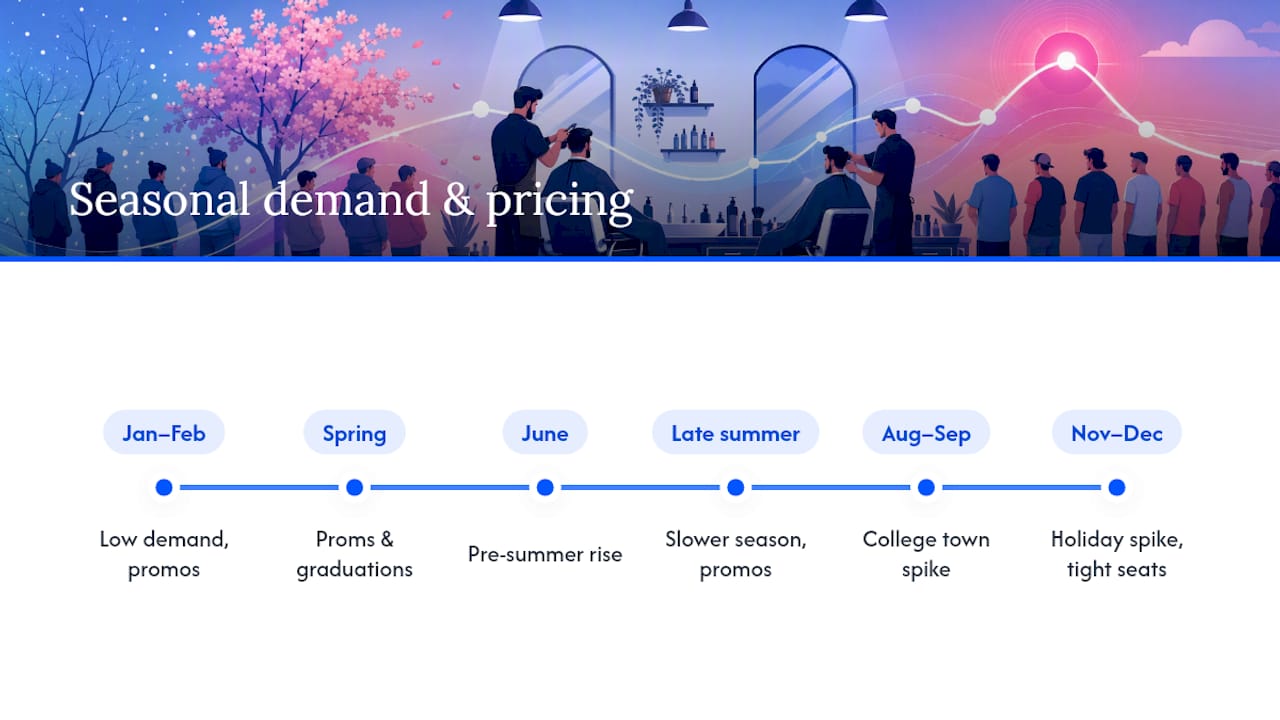
Some shops raise prices modestly during peak weeks simply because every chair is booked and they can afford to. More often, the price stays flat but availability tightens, meaning you pay the same rate but have a harder time getting your regular barber’s slot without booking days in advance.
The flip side is that slower seasons, typically mid-January through February and parts of late summer, bring more promotional activity. Shops run first-visit discounts, referral deals, or package pricing on combos to fill chairs during the lull. Some barbershops also offer loyalty punch cards, where your sixth or tenth cut comes free or discounted, which effectively lowers your average per-visit cost if you stick with the same shop.
If you’re price-sensitive, timing your visits around these cycles matters more than shopping around for a cheaper shop. Ask your regular barber directly if the shop runs seasonal specials. Most independent shops don’t advertise these widely; they mention them to regulars or post them only on social media, not on the main pricing page.
How Do You Read a Barbershop Pricing Menu Correctly?
Pricing transparency in barbershops isn’t governed by a single federal law the way some service industries are regulated, but most states enforce general consumer protection statutes that require businesses to honor posted prices and disclose mandatory fees before service. That means a shop generally can’t quote you $30 and charge $45 without explaining the difference upfront.
The practical issue isn’t legality. It’s menu literacy. A lot of posted menus use phrasing that sounds like one price but functions like a floor. “Haircuts from $30” almost always means $30 is the minimum, reserved for the newest barber or a basic clipper cut, not the master barber doing a detailed fade.
When you read a menu, look for three things: whether prices are listed per barber or as a flat shop-wide rate, whether add-ons like beard trims or hot towels are itemized separately or bundled in, and whether there’s language about walk-in versus appointment pricing. Shops that list a single flat price for every barber regardless of experience are rare, and when you see one, it usually means the shop caps what any barber can charge rather than letting seniority drive price.
If a posted price feels unclear, ask directly before sitting down: “Does this price include the neck shave?” or “Is this the rate for the barber I’m booking, or the shop minimum?” A shop with nothing to hide will answer immediately. Hesitation on a direct pricing question is a bigger red flag than the price itself.
How Does Barbershop Pricing Vary Outside Major Cities?
Almost everything written about barbershop pricing focuses on major metros, but most Americans don’t live in one. Small-town and suburban pricing tells a different story, and it’s usually a friendlier one for your wallet.
In smaller cities and rural areas, a standard adult cut frequently lands $10 to $15 below the major-city median of about $38.52, often landing in the $22 to $32 range. Lower commercial rent is the main driver, along with less competition for specialized barbers, which keeps tiered pricing flatter. A master barber in a small town might only charge $5 more than a junior barber, compared to a $15 or $20 gap you’d see in a big city.
Regionally, the South and parts of the Midwest tend to run below the national average, while the Northeast and West Coast run above it, consistent with the state-level variation seen in broader cost data. College towns are the exception to the rural discount pattern: student demand keeps prices closer to metro averages even in otherwise low-cost regions.
Internationally, the picture shifts even more. Labor costs and service norms vary so much country to country that a “global average” isn’t meaningful. What holds true everywhere is the same underlying logic: rent and barber skill set the floor, and market demand sets how far above that floor a shop can charge. If you’re comparing prices while traveling, compare against local averages, not what you’d pay at home.
What Extra Fees Should You Watch For Beyond the Base Price?
The quoted haircut price is rarely the full story. A handful of common add-on fees catch people off guard, and knowing them ahead of time keeps your budget accurate.
Walk-in surcharges are becoming more common as shops shift toward appointment-based scheduling. Some shops charge $3 to $5 more for walk-ins since they disrupt the day’s schedule, while appointment clients get the base rate.
Rush or same-day booking fees show up at busier shops, especially around holidays or weekends, typically adding $5 to $10 for squeezing you in outside normal availability.
Special request fees apply to detailed design work, hair tattoos, intricate part lines, or multi-step color services. These aren’t hidden, exactly, but they’re often verbal add-ons rather than line items on the printed menu, so ask before the clippers come out.
Late cancellation or no-show fees have grown common as shops try to protect their schedules from empty chairs. A missed appointment without 24-hour notice can cost $10 to $25 or a percentage of the service price, depending on the shop’s policy.
Product upsells (pomades, beard oils, styling sprays) aren’t fees in the traditional sense, but they’re the most common way a $40 visit turns into a $60 receipt. None of these are unreasonable on their own. The problem is when they show up for the first time at checkout instead of on the menu or in the booking confirmation. Ask about extra charges when you book, not when you pay.
When Consistency Beats Chasing the Lowest Price
Sticking with one barber who knows your hair, your fade line, your quirks, is often worth a $5 to $10 premium over hopping shops for the cheapest quote. Consistency saves you the awkward “let me fix that” visit two weeks later. If you want to test a new barber, start with a basic cut before committing to anything complex. That $39 median benchmark is your floor for comparison, not your ceiling for loyalty.
Book With a Barbershop That Shows Its Real Prices Upfront
If everything in this guide told you one thing, it’s that surprise charges come from unclear menus, not from barbers trying to rip you off. Getexclusively gives barbershops a branded booking system where every service, every barber’s rate, and every add-on shows up before you ever confirm an appointment. No guessing what the “fade” line item actually covers.
The platform’s customizable appointment software lets shops list provider-level pricing so clients can see exactly who’s cutting their hair and what it costs before booking, and integrated payments mean the price you confirm is the price you pay, add-ons included. If you’re a barber or shop owner tired of pricing confusion creating friction with clients, check out Exclusively’s pricing plans and see what a fully transparent booking setup looks like for your shop.
Frequently Asked Questions
How much does a barbershop haircut typically cost? A standard adult men’s haircut at a barbershop typically costs $35 to $45 in major cities, with a median around $39, before tip.
Is it normal to tip at a barbershop? Yes.
Why do some barbershops charge $60 or more for a haircut? Higher prices usually reflect senior barber rates, premium amenities like hot towels and shampoo, higher rent in metro areas, or added services bundled into the visit.
Are haircut plus beard trim combos cheaper than booking them separately? Often, yes. Shops frequently price combos below the sum of the two services since they share prep and cleanup time.
Do barbershop prices change with the season? Prices can rise modestly during peak demand periods like the holidays and pre-summer months, while slower seasons often bring promotional discounts and loyalty deals.
Sources
- What Is The Average Price For A Haircut At A Barbershop? — Haircut Now
- Yelp — Men’s haircuts cost overview