
A Custom Barber App Is the Fastest Way to Lock In Repeat Clients
A Custom Barber App Is the Fastest Way to Lock In Repeat Clients
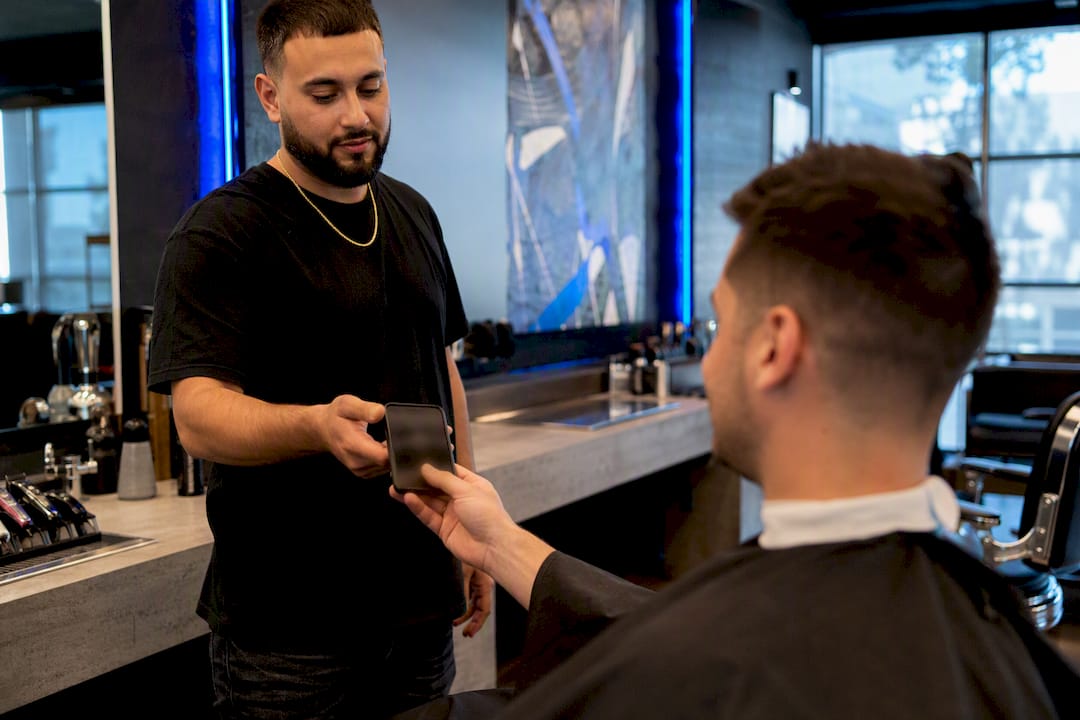
If your shop books more than a handful of regulars a week, a fully branded custom barber app is the right move, and a white-label platform like Getexclusively is the leading way to get there without hiring a development team. It puts your name on the App Store, your booking rules in the calendar, and your client data in your hands instead of a marketplace app’s.
Three quick checks tell you if you’re ready: you have enough repeat clients to justify an app icon on their home screen, you’re tired of a directory app deciding how your brand looks, and you want pricing, staff assignments, and promotions under your control instead of a platform’s default settings.
- Shop size: three or more chairs usually means enough booking volume to justify the investment.
- Repeat client base: if 40% or more of your bookings are returning clients, an app pays for itself through retention alone.
- Brand control: if you’re rebuilding a following after rebranding or opening a new location, a generic booking directory works against you.
The expected payoff shows up in three places: more bookings per client per year, fewer no-shows once deposits and reminders are automated, and a measurable bump in retention once clients start rebooking straight from a home screen icon instead of searching for you again.
Key Takeaways
A branded custom barber app outperforms generic directory apps by putting booking control, client data, and repeat-visit marketing directly in the shop’s hands.
| Point | Details |
|---|---|
| Choose based on repeat clients | Shops with a strong returning client base see the fastest payoff from a branded app. |
| Demand a full feature checklist | Require staff scheduling, waitlists, deposits, and loyalty tools before signing with any vendor. |
| Match timeline to your path | Builder templates launch in days to weeks; custom development takes months at higher cost. |
| Confirm data ownership upfront | Ask for CSV or JSON export and backup policy before committing to any platform. |
| Getexclusively fits shops wanting full brand control | It combines a branded website, native app, and Square-based payments in one subscription. |
Table of Contents
- What to Look for in a Custom Barber App
- How a Branded App Moves Your Bookings and Revenue
- How Long It Takes and What It Costs to Launch
- Payments, Data Ownership, and Who Handles Updates
- Design Choices That Actually Increase Bookings
- Proof This Approach Works in Real Shops
- Your Launch Checklist Before Going Live
- Where Most Shops Get This Wrong
- Get a Branded App Built Around How Your Shop Actually Works
- Documentation and Resources Worth Bookmarking
- Sources
What to Look for in a Custom Barber App
Not every app builder ships the same feature set, and the gaps only show up after you’ve signed a contract. Before you commit to any barber mobile app, run the vendor’s feature list against what your shop actually needs day to day.
Booking has to handle real shop complexity, not a demo version of it. That means service types with different durations, buffer time between cuts, and rescheduling rules that don’t require a phone call to fix. Vendor pages for platforms in this category consistently advertise bookings, waitlists, and loyalty tools as table stakes, which tells you these features are the baseline, not a premium add-on.
Staff management is where a lot of generic tools fall apart. Each barber needs an individual schedule, the ability to reassign a client if someone calls in sick, and commission tracking that doesn’t require a separate spreadsheet.
Here’s the fuller checklist worth demanding from any provider:
- Real-time waitlist and walk-in handling that updates availability instantly, not on a delay.
- In-app payments with tipping, split payments between services, and a clean refund process.
- Loyalty programs, membership tiers, and promo codes built into the booking flow.
- Push and SMS reminders that trigger automatically before every appointment.
- A client database with appointment history, notes, and preferences visible to every barber.
- Reporting that breaks down revenue by barber, service, and time slot.
Pro Tip: Ask for a live demo of the reassignment flow specifically. This is the feature vendors gloss over in sales calls and the one that causes the most frustration once you’re actually running a busy Saturday.
How a Branded App Moves Your Bookings and Revenue
A booking app that carries your name changes client behavior in a way a third-party directory app never will. When a client has your icon on their phone, rebooking becomes a habit instead of a decision, and that habit is what drives lifetime value up over months, not just the next appointment.
No-show reduction is the clearest, fastest return. Automated reminders paired with a required deposit at booking cut down on last-minute cancellations, since clients who’ve already paid something are far less likely to skip. Vendor feature sets in this space bake security deposits and payments directly into the booking flow for exactly this reason.
Beyond fewer no-shows, a branded app opens revenue channels a walk-in shop or a listing on a directory app simply doesn’t have:
- In-app product sales for pomades, clippers, or merchandise between appointments.
- Membership tiers that lock in recurring monthly revenue instead of one-off visits.
- Priority booking windows you can sell as a premium add-on.
- Push notifications that double as a marketing channel with zero per-message cost.
That last point matters more than it sounds. Every push notification you send is a free, direct line into a client’s phone. A directory app will never hand you that channel because the relationship belongs to the app, not the shop.
How Long It Takes and What It Costs to Launch
Launch speed depends almost entirely on which path you choose, and the gap between the fastest and slowest options is measured in months, not days.
- Template and builder platforms: no-code builders and app templates can get a barbershop app live in days to a couple of weeks. A 2026 roundup of booking app platforms points to builder tools as the practical choice when your requirements are standard and you need speed over customization. Template marketplaces offer pre-built booking schedulers and barber profiles you can theme with your branding rather than build from scratch.
- White-label SaaS platforms: these sit in the middle, giving you a branded app under your own name published to both app stores, typically live within a few weeks once your business data is loaded in.
- Full custom development: hiring a dev team to build from zero takes months and carries the highest upfront cost, usually only worth it if your workflow is genuinely unlike anything a template can support.
Pricing shapes follow the same split. Builder and white-label options usually run on monthly subscription tiers, with higher tiers unlocking multi-location support, custom integrations, and full app store publishing help. Custom development flips that model: you pay a large upfront design and build fee, then smaller ongoing maintenance costs. The biggest cost drivers across every path are the same: how many locations you’re running, how many third-party tools you need wired in, and how much bespoke design work you want beyond a standard template.
Payments, Data Ownership, and Who Handles Updates
The technical details you skip during a sales call are the ones that cause problems six months in. Before signing anything, get clear answers on how payments settle and who owns your client data once it’s in the system.
Payment processing usually runs through Stripe or Square, and settlement timing varies by processor, so ask specifically how reconciliation works with your existing bookkeeping. If your shop already runs Square payments, confirm the app syncs transaction history without requiring manual reentry.
Calendar sync matters just as much. If a barber keeps a personal calendar for other clients, appointments need to sync both directions without creating double bookings.
- Confirm data exports cleanly to CSV or JSON, not locked behind a support ticket.
- Ask who patches security issues and how often updates roll out.
- Check whether backups run automatically or require you to request them.
- Clarify what happens to your client list if you ever switch providers.
Pro Tip: Test the export function before you fully commit, not after. Builder communities regularly flag integration issues that only surface once real data is loaded in, and you want to find that out during a trial, not during a busy month.
Design Choices That Actually Increase Bookings
The features matter, but the flow around them decides whether clients actually finish a booking or abandon it halfway through. A cluttered app store listing or a booking flow with too many steps quietly kills conversion before you ever notice it happening.
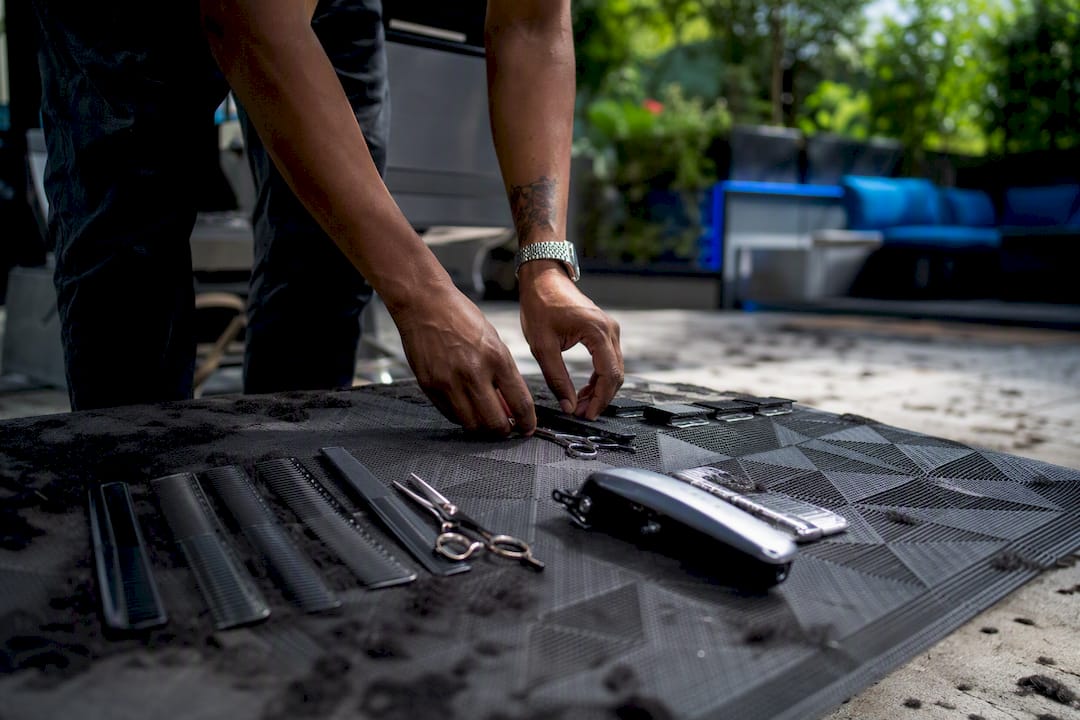
Your app store icon, screenshots, and description are doing marketing work whether you treat them that way or not. A blurry icon or a generic stock photo screenshot signals a low-effort app, and clients judge that in about two seconds before they even open it.
The booking flow itself should take four taps, max: pick a service, pick a barber, pick a time, pay. Every additional screen you add between “open app” and “confirmed” is a chance for someone to give up and call a competitor instead.
- Show barber portfolios and past work photos directly in the booking flow to build trust before the first visit.
- Keep load time under a couple of seconds. Slow apps get abandoned before the calendar even loads.
- Design for one-handed use on a phone screen, since almost nobody books a haircut from a desktop.
- Let returning clients rebook their last service in one tap instead of rebuilding the whole order.
Proof This Approach Works in Real Shops
Getexclusively’s platform gives barbershops a branded website, native iOS and Android apps under their own name, integrated booking, and Square-powered payments in one system, without the shop needing to touch a line of code. The mobile app product and custom website work together so a client’s booking experience matches the shop’s actual identity from the app icon to the confirmation email.
Shops running on white-label platforms in this category typically launch with a version of the same pattern: a small chain rebrands its directory-app presence into a single app under its own name, then sees rebooking rates climb once push notifications replace text reminders sent from a generic number, similar to what brands achieve with Fitness Flow — The operating system for modern gyms.
The real proof isn’t the feature list. It’s whether clients open the app a second time without being told to. That’s the number every shop owner should be tracking, and it’s the one a branded app is built to move.
Check independent Trustpilot reviews for platforms in this space before signing with any vendor. Real feedback on support responsiveness tells you more than a sales deck ever will.
Your Launch Checklist Before Going Live
Getting from “we want an app” to “clients are booking on it” comes down to preparation more than technology. Shops that gather their business data before setup consistently launch faster and hit fewer snags once the app goes live.
- Collect everything first: full service list with durations and prices, staff photos, bios, and your logo and brand colors.
- Test internally: run the full booking flow yourself, end to end, before any client sees it.
- Soft launch: roll it out to existing regulars first and ask directly what confused them.
- Go public: push it through social, in-shop signage, and email once the soft launch feedback is addressed.
Before signing with any vendor, ask directly: how is data exported if we leave, what’s the update cadence, is there an SLA on support response time, and who handles App Store and Google Play submission on our behalf?
Pro Tip: Track three numbers for the first 60 days: booking volume, no-show rate, and repeat-visit rate. Those three tell you faster than any dashboard whether the app is earning its subscription cost.
Where Most Shops Get This Wrong
Most advice on barber shop management apps treats every feature the same, as if a loyalty program matters as much as a clean booking flow. It doesn’t. The single biggest lever is friction reduction, getting a client from “I want a haircut” to “confirmed” in as few taps as possible, and most shops overinvest in flashy extras while their booking flow still takes seven screens to complete.
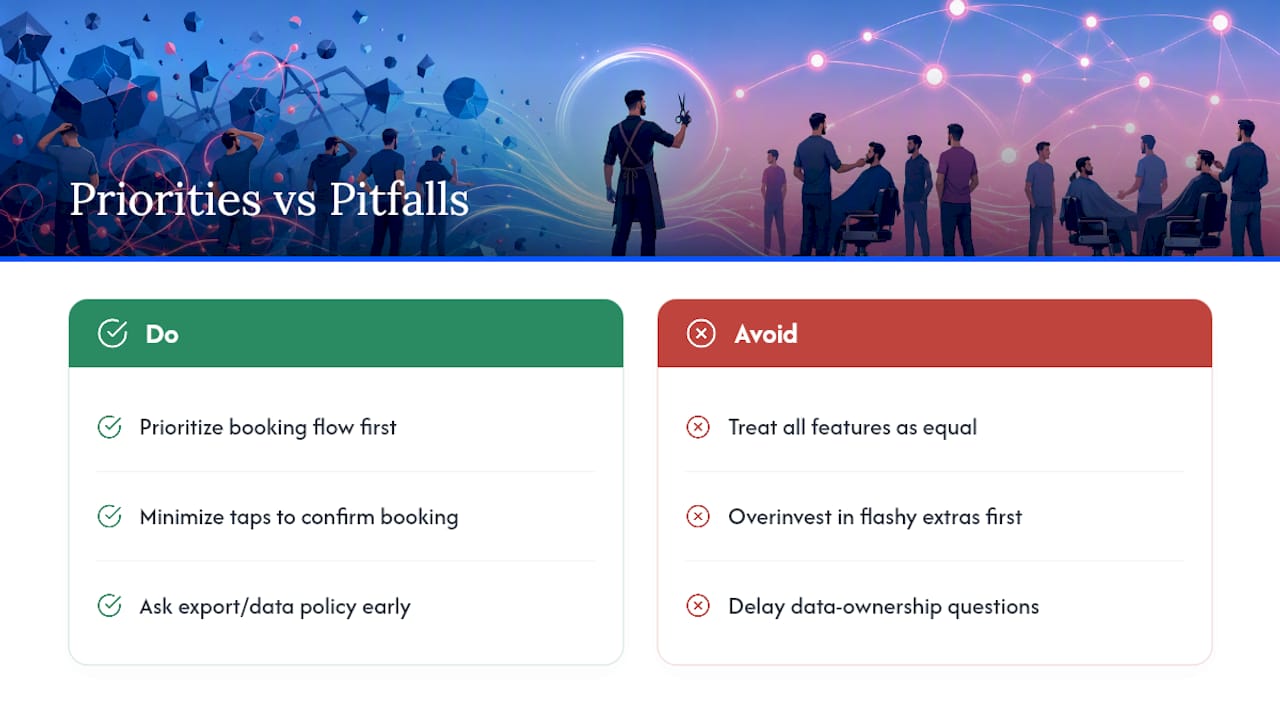
The conventional advice also underrates data ownership until it’s too late. Owners get excited about app store presence and forget to ask what happens to two years of client history if they ever switch providers. That question should come before the demo, not after the contract.
If you take one thing from this, prioritize the booking flow and the export policy before anything else. Loyalty programs and push notifications are worth having, but they’re additions to a working core, not substitutes for one.
— Service
Get a Branded App Built Around How Your Shop Actually Works
Getexclusively gives barbershops a fully branded website, native iOS and Android app, and integrated booking and payments under one subscription, with none of the generic directory-app branding that makes clients think they’re booking with someone else. It’s built specifically for barbers and beauty professionals who want to set their own pricing and availability while keeping every client interaction under their own name.
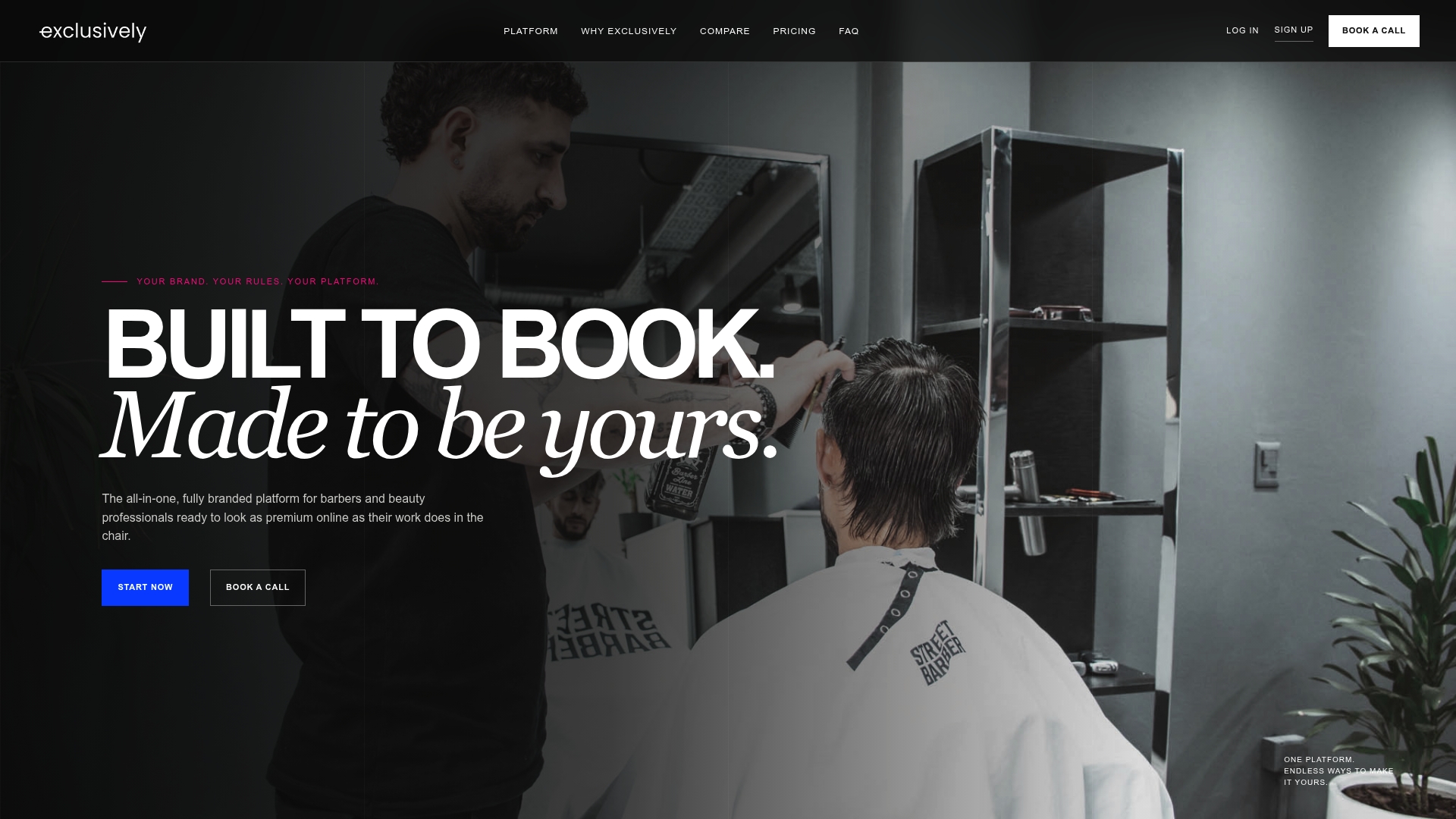
If you’ve been weighing a builder template against a fully managed platform, the difference shows up after launch: Getexclusively handles the App Store submission, payment integration, and updates, so you’re not the one troubleshooting a broken sync at 9 PM. Compare the fit directly against SQUIRE or see pricing tiers to find the plan that matches your shop size, then book a call to walk through your specific service list and staff setup.
Documentation and Resources Worth Bookmarking
- FlutterFlow documentation for shops evaluating template-based builds.
- Trustpilot reviews for real user feedback before choosing a vendor.
- Getexclusively’s homepage for an overview of the branded platform discussed throughout this guide.
Sources
- Top 6 Booking Apps for Barbers: What’s Hot in 2026 — Adalo
- Barbery - Barbershop Booking App Template — FlutterFlow community
- Barberly reviews on Trustpilot