
Pilot One Stacked Slot Today: Double Book Safely for Salon Owners
Pilot One Stacked Slot Today: Double Book Safely for Salon Owners

Double booking works when a service has built-in downtime, your team can cover the gaps, and one calendar controls every slot. It fails when stylists lack support, timing is guessed instead of measured, or clients feel like an afterthought. Before stacking a single slot, confirm you have predictable processing times, a person assigned to manage overlaps, and a single source of truth for availability. Pilot one stacked appointment with a client who knows exactly what to expect, then judge the results from there.
TL;DR:
- Double booking works best when scheduling passive services with sufficient processing time, management controls, and a single, real-time booking system.
- It can increase revenue significantly but risks clients perceiving stylists as rushed or distracted if not carefully piloted and monitored.
- Automation features like instant availability updates, role-based permissions, and automated buffers are essential to prevent accidental overlaps.
- A quick, transparent fix is crucial when double booking occurs, with priority given to objective criteria and prompt client communication.
- Solo stylists lacking support should avoid stacking, while team salons with established workflows can experiment with careful pilots and monitoring.
Table of Contents
- What Double Booking Means in a Salon and Why Salons Use It
- Pros, Cons, and Business Trade-Offs of Stacking Appointments
- Step-By-Step Rules to Double Book Without Wrecking Client Experience
- Scheduling Settings, Software Behaviors, and Policies to Prevent Accidental Double Bookings
- Damage Control: What to Do Immediately When a Double Booking Occurs
- Practitioner Tips and How a Branded Booking Platform Supports Safe Stacking
- Who Should Try Stacking and Who Should Skip It
- A Platform Built to Keep Your Calendar Honest
- Sources
What Double Booking Means in a Salon and Why Salons Use It
Double booking, often called stacking, means scheduling two clients into overlapping time slots on purpose because one of them has passive downtime built into the service. A color client sitting under foil for 35 minutes doesn’t need a stylist hovering the whole time. That gap is chair time going to waste unless someone fills it.
This is different from accidental overbooking, where two clients land on the same slot because of a scheduling error, a sync failure, or someone forgetting to block a calendar. Intentional stacking is a business decision. Accidental overbooking is a system failure. Confusing the two is how salons end up damaging trust they meant to build.
Salons stack appointments for a few practical reasons:
- Maximizing revenue per chair during hours that would otherwise sit half empty
- Monetizing passive processing time instead of letting it go unbilled
- Creating a sense of demand that can make a book look, and eventually become, busier
The trade-off is real. A stylist juggling two clients risks looking rushed even when the timing works on paper, and that perception often comes from body language rather than the clock.
Pros, Cons, and Business Trade-Offs of Stacking Appointments
Stacking can meaningfully raise daily revenue when the timing lines up, but the risk runs in the other direction just as fast. Industry coverage frames double booking as a balance between income gains and client experience risk, not a guaranteed win.
- Revenue upside: a stylist who fills 30 to 40 minutes of processing time with a second client’s consultation, blowout, or quick service adds billable hours without adding chairs.
- Service-quality downside: clients notice when a stylist is distracted, and rushed transitions between chairs raise the odds of a mistake, from a missed toner step to a scheduling collision the client can feel.
- Staffing strain: stacking without an assistant means the stylist absorbs the extra workload personally, which speeds up burnout over a full week of back to back stacked days.
- Fit by salon model: team salons with assistants or apprentices can stack reliably because someone else manages the overlap. Solo stylists working without support are a poor fit almost by default.
The honest read: stacking rewards salons that already run tight operations and punishes the ones using it to paper over a scheduling problem.
Step-By-Step Rules to Double Book Without Wrecking Client Experience
Stacking works when you treat it like a controlled experiment, not a habit you back into. Here’s a sequence that keeps the risk manageable.
- Pilot one stacked slot at a time. Pick one stylist, one day, one pairing. Track how it actually went, not how you assumed it would go, before scaling it.
- Pair services by downtime, not convenience. Only stack a passive service (foil processing, a deep conditioning treatment) against an active one. The rule of thumb from working stylists is that the passive window needs to equal or exceed the active steps of the second service, or the handoff between chairs becomes the bottleneck.
- Set buffers based on your own data. A 10 minute buffer might cover a quick trim; a color service often needs 20 to 30 minutes of cushion. Pull your last month of appointments and see where you actually run long, then buffer accordingly.
- Pick one canonical calendar and stop mirroring it manually. Every manual copy of a schedule is a place for human error to sneak in.
- Assign clear roles during processing time. An assistant checks color development, restocks stations, or preps the second client, while the stylist works the active chair.
- Script the client conversation. A simple line like “You’ll have about 30 minutes of processing time, and I’ll be working with another client during that window” sets the expectation before it becomes a surprise.
- Measure the outcome. Track on-time completion rate, client satisfaction, and rebooking rate for stacked slots versus standard ones for at least a month before deciding to expand it.
Pro Tip: Run your pilot on your slowest stylist day first. If the timing breaks down, you’ll find out with the smallest possible audience.
Scheduling Settings, Software Behaviors, and Policies to Prevent Accidental Double Bookings
Most accidental double bookings trace back to a calendar problem, not a staffing problem. Systems that rely on one-way iCal feeds tend to lag, creating a window where two people can book the same slot before either calendar catches up. A real-time booking API or a single branded booking widget closes that gap because availability updates the instant a slot fills.
A few settings prevent most of the damage before it happens:
- Require manager approval for same-day bookings so nobody blindly stacks a slot without a second look.
- Set staff-level permissions so only the right people can override a block.
- Turn on automated padding between appointments so a slot cannot be booked flush against another without a buffer.
- Use confirmation and reminder messages on a set cadence to catch last-minute changes before they become no-shows or overlaps. Scheduling vendors consistently recommend padding, limits, and reminders as baseline defenses against overlap errors.
For high-volume operations, running a 24-hour pre-arrival audit and documenting every manual calendar edit catches the mismatches that automated systems miss. It’s a five-minute habit that prevents a very bad morning.
Damage Control: What to Do Immediately When a Double Booking Occurs
Speed and honesty matter more than the outcome you offer. Clients respond far better to a fast, transparent fix than a delayed one, even when the fix is imperfect.
- Triage first. Decide which client keeps the slot using objective criteria: who arrived first, who has a time constraint that day, whose payment is already confirmed.
- Contact the displaced client immediately, not when they show up and find out on their own.
- Offer a real remedy: a refund, first priority on the next opening, a service upgrade, or a referral to another stylist on your team. Fast refunds are easier to manage when payments run through an integrated processor like Square or Stripe.
- Document what happened and fix the cause, whether that’s a permissions gap or a calendar that wasn’t the single source of truth.
Practitioner Tips and How a Branded Booking Platform Supports Safe Stacking
Working stylists who stack successfully describe it less as a scheduling trick and more as a teamwork exercise.
Timing tricks only work when someone else is managing the transition, as explained in this aesthetic skin care workflow guide that highlights managing client expectations and seamless service transitions. Map the passive processing time to active chair time, hand off clearly, and communicate with the client so nothing feels rushed even when two people are technically sharing your attention.
That summary reflects what stylists who double and triple book successfully report about the operational side of stacking: teamwork and clear roles matter more than raw scheduling skill.
The software layer matters just as much. A single branded booking widget, automated buffer rules, role-based staff permissions, and in-app confirmations remove most of the guesswork that causes accidental overlaps in the first place. Booking help resources walk through configuring these settings step by step.

Who Should Try Stacking and Who Should Skip It
Solo stylists without reliable assistant coverage should be cautious. Stacking without support usually shows up in your work within a few weeks, not months. Team salons and suites with standardized processes have real room to experiment, especially if they run a pilot before committing. Watch for warning signs: repeated client complaints, a climbing reschedule rate, or a rebooking rate that quietly slides. Any of those means it’s time to scale back, not push through.
— Service
A Platform Built to Keep Your Calendar Honest
Most accidental double bookings come from juggling multiple calendars, and a platform built for barbers and beauty professionals who need one branded system instead of five disconnected ones.
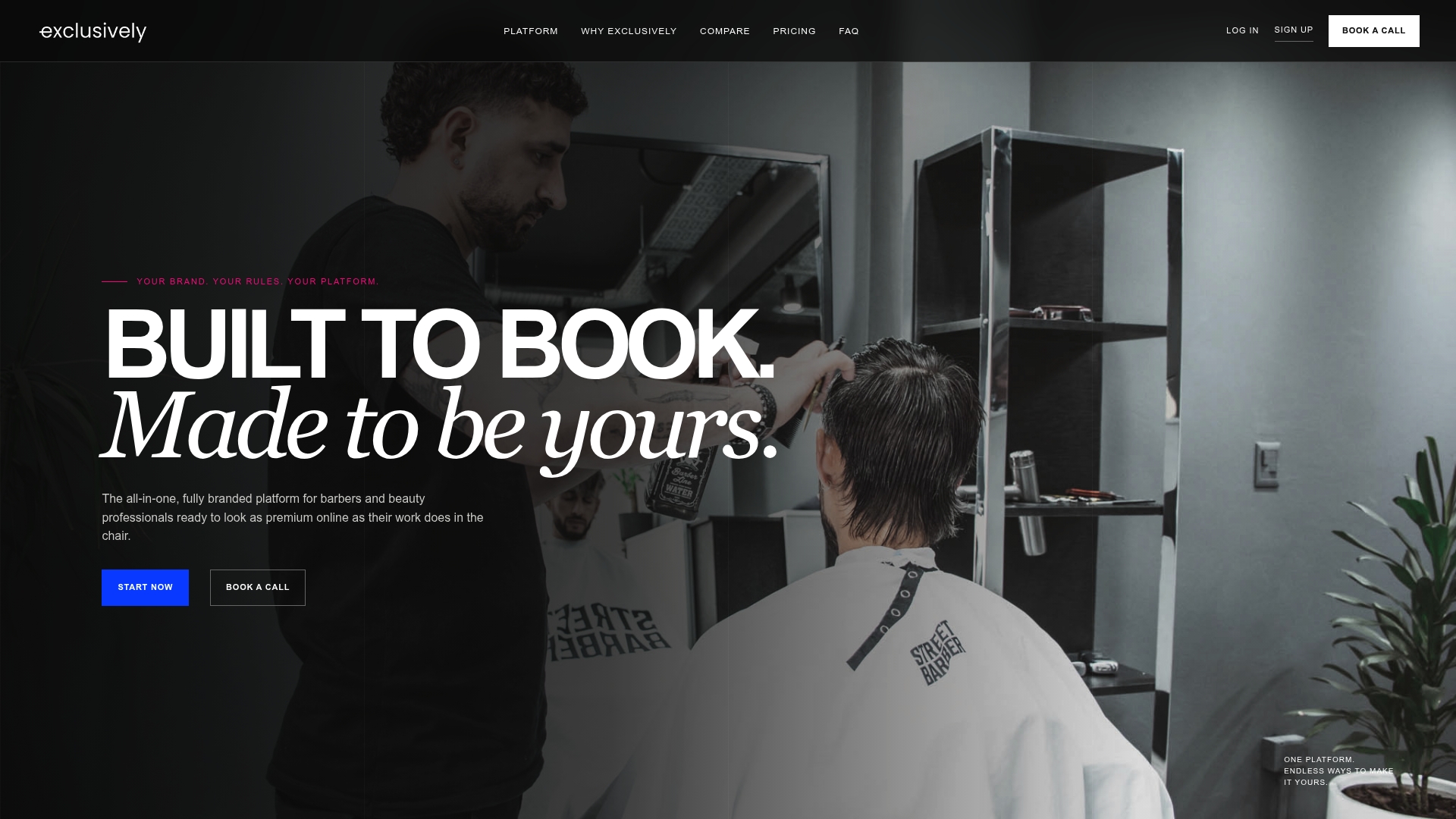
The platform gives you a single branded booking widget across your custom website and mobile app, so clients never book through a channel that isn’t syncing in real time. Buffer automation, role-based staff permissions, and instant booking confirmations run in the background, so a same-day change doesn’t turn into a morning full of apologies. If you’re weighing platforms, the appointment software breakdown covers exactly how those buffer and permission controls work, and the booking help videos walk through setup in plain steps. Check the pricing page to see which plan fits your team, and set up a pilot slot on your own calendar this week.
Sources
For deeper reading on scheduling controls and stylist strategy, see Behind the Chair’s practitioner interviews and Acuity Scheduling’s guide to preventing overlaps.
- Avoiding double bookings | RentTools
- How to prevent double bookings | Smoobu
- How to avoid double-booking appointments | Acuity Scheduling