
Salon Membership Tiers: Break Even Pricing and a 90 Day Launch
Salon Membership Tiers: Break Even Pricing and a 90 Day Launch

Use a three-tier membership (Essential, Premium, VIP), anchor the middle tier, offer monthly billing plus a discounted annual plan, and pilot before a full rollout. Start with three moves: pick the core service credit, set a pilot price, and turn on recurring billing tied to your booking system. Membership tiers for a salon work best when they stay simple.
TL;DR:
- Price tier credits against average visits, average ticket, and gross margin; confirm full monthly use still leaves margin before setting member savings.
- An annual option usually carries a 10% to 15% discount, reduces churn, and brings revenue forward; test every price against conservative churn assumptions.
- Favor capped service credits, priority booking, and retail or birthday perks; unlimited services and free extras can displace visits clients would otherwise pay for.
- Show draft tiers to regular clients; if most avoid Premium, revise the value gap between tiers instead of changing the clients’ preferences.
- At the 90 day review, compare penetration, churn, visits per member, acquisition cost, and membership revenue with forecasts, then adjust prices or perks.
Table of Contents
- Why do memberships make your revenue more predictable?
- How should you structure your salon membership tiers?
- How do you price tiers and forecast break-even?
- What does a sample three-tier template look like?
- Which perks sell memberships without eating your margin?
- What should your launch checklist and KPIs look like?
- What we have learned about selling memberships
- How we simplify membership billing, booking, and member communications
- FAQ
- Sources
Why do memberships make your revenue more predictable?
A membership turns a visit that might happen into income that arrives every month. That smooths cash flow, makes payroll and product orders easier to plan, and gives you a baseline before the first client walks in. Members also tend to visit more often, because they have already paid and want to use what they bought.
Industry data backs this up. Membership sales grew roughly 10% year over year, and salons with membership programs grew revenue and kept existing guests at higher rates than salons without them.
Membership operators see material retention and revenue benefits, though results vary by vertical.
Expect the gains to compound: more visits per member, fewer lapsed clients, and a higher lifetime value per person. Track those effects against your forecast from month one.

How should you structure your salon membership tiers?
Three tiers is the industry standard. Two tiers feels binary, and four or more creates decision paralysis. The middle tier is your anchor: price and package it so it looks like the obvious best value, and most buyers will land there.
Here is how the roles usually split:
- Essential: the entry point, with a small monthly service credit and a modest discount on add-ons.
- Premium: the anchor, with a larger credit, retail savings, and a priority booking window.
- VIP: the aspirational tier, with rollover credits, guest passes, and early access to new treatments.
Spread benefits so each step up feels earned. Service credit, discounts on additional services, priority booking, retail perks, rollover credits, and guest passes are the levers you have.
Pro Tip: Show your draft tiers to a handful of regulars and ask which one they would pick and why. If most skip the middle, the gap between tiers is wrong, not the clients.
How do you price tiers and forecast break-even?
Offer monthly billing as the default, then add an annual option at a 10–15% discount. Annual plans reduce churn and lock in revenue up front.
To set each monthly price, work through these steps:
- Estimate the average number of visits per member each month.
- Multiply by your average ticket per visit to get the value a member uses.
- Apply your gross margin to see what that usage really costs you.
- Set a monthly price that preserves margin while the credit still feels generous.
- Test the price against a conservative churn assumption.
Here is an illustrative example. Estimate a member’s likely monthly visits and average ticket, then use your gross margin to calculate the cost of the benefits. Set a tier price that gives the client a visible saving while preserving your margin and leaving room for retail add-ons.
For a simple forecast, multiply your active client count by an assumed penetration rate, ramp it over several months, then rerun it with higher churn to see how fragile the plan is.
What does a sample three-tier template look like?
Copy this structure, then adjust every row to your own ticket and margin. The positioning matters more than the exact numbers: entry is low-cost credit, the middle is best value, and VIP carries premium perks.
| Benefit | Essential | Premium | VIP |
|---|---|---|---|
| Monthly service credit | Small | Medium | Large |
| Discount on additional services | Light | Moderate | Deep |
| Retail product discount | Basic | Better | Best |
| Priority booking window | None | Standard | Extended |
| Rollover credits | No | Limited | Yes |
| Guest passes | None | Occasional | More frequent |
| Early access to new services | No | No | Yes |
To localize it, take your average ticket and gross margin, then size each credit so a member’s full use still leaves you a healthy margin. If a tier’s credit would wipe out that margin, shrink the credit before you shrink the perks clients actually notice.
Which perks sell memberships without eating your margin?
Control cost first. Unlimited services often cost more than they bring in, so prefer credits or capped offers that you can model. Then layer perks that feel generous but cost little:
- Retail discounts move product that already sits on your shelves. Curated care items, such as a hair growth chew, also work as a member-only bundle.
- Priority booking costs nothing and makes members feel first in line.
- Birthday perks cost little and give clients a reason to come in.
- Exclusive events build community and give VIPs a reason to stay.
- Bring-a-friend credits turn members into your best acquisition channel.
Design perks to drive repeat behavior, and skip any that cannibalize paid visits. A free add-on that clients would otherwise buy every time is a leak, not a perk.
What should your launch checklist and KPIs look like?
Work through the launch and early review in order:
- Pick a small group of pilot members and set up recurring billing and booking before anyone signs up.
- Train staff to explain each tier in one sentence and to recommend the middle one.
- Prepare in-salon signage and email or text announcements, then add a founding-member incentive.
- Launch, and monitor signups closely at first.
- Hold a 90-day review and adjust pricing or perks based on what the numbers show.
Your core KPIs are membership penetration, monthly churn, average visits per member, member acquisition cost, and membership revenue against forecast.
Industry data shows membership operators retaining existing guests at higher rates, so compare your churn against your own pre-membership repeat rate.
Before you promote anything, also confirm your cancellation terms and terms of service are written down and shown at signup.
What we have learned about selling memberships
Most membership programs stall at the front desk, not in the pricing. If signing up takes more than a minute or renewals fail quietly, staff stop offering it. Pay your team a small bonus per signup, keep the booking and billing flow on your own branded site, and failed renewals and admin work drop sharply. Clients trust a checkout that looks like your salon.
— Service
How we simplify membership billing, booking, and member communications
When billing, booking, and your brand live in one place, there is less manual work and fewer missed renewals. Our platform combines a custom website, online booking, a branded mobile app, and integrated payments, so members sign up, book, and pay without leaving your brand.
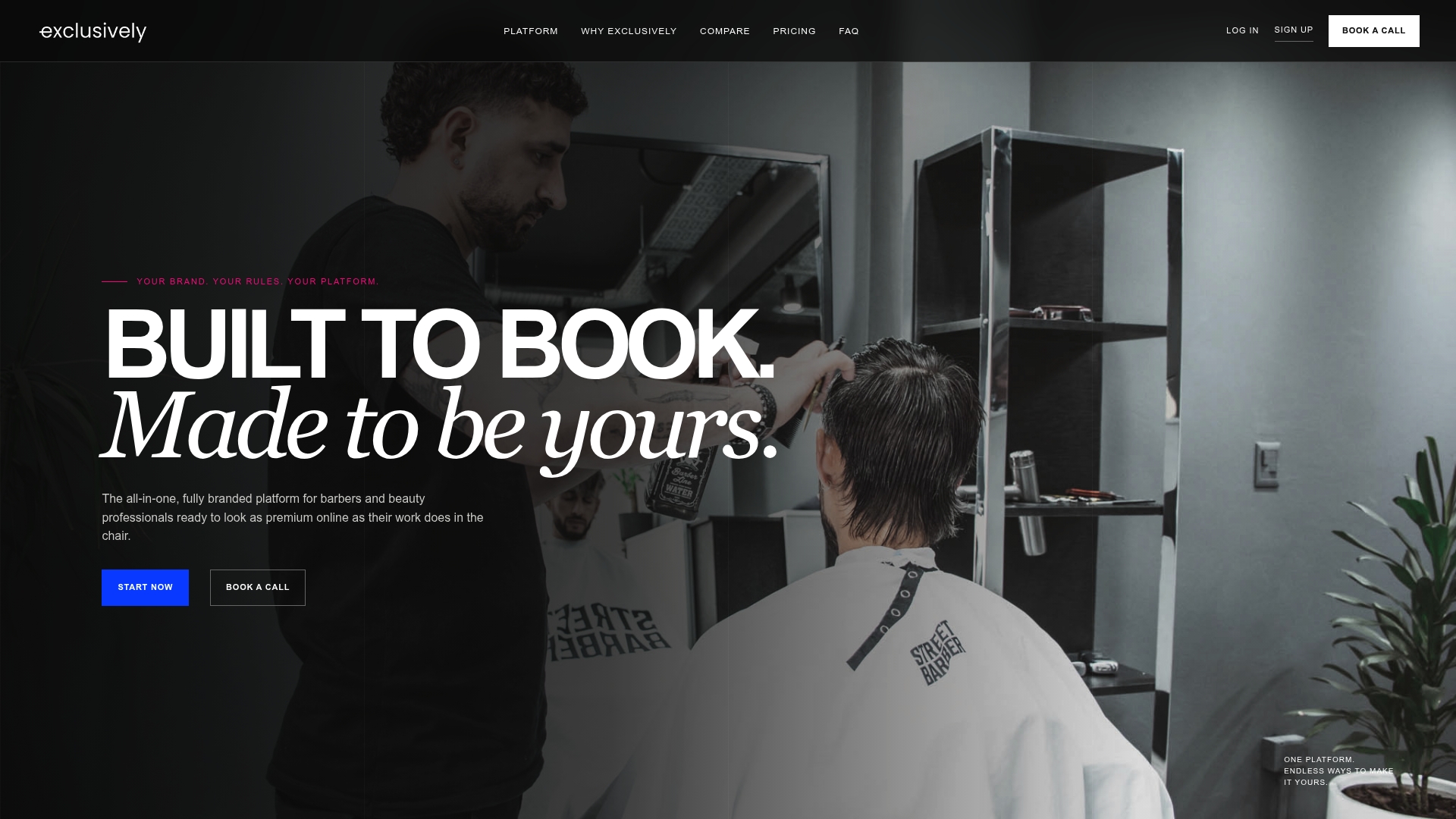
- Our Business Website plan starts at $49 per month, with Website + Booking at $199 per month and Website + Booking + Apps at $299 per month.
- Additional locations are $49 per month per location.
- Our custom websites give your membership signup flow a home you own.
- Our booking software lets each provider control their own services and availability.
When you are ready to pilot, book a call with our team and we will walk you through setting up billing, booking, and your first tier.
FAQ
How do salon memberships work?
Clients pay a recurring monthly or annual fee and receive benefits such as a service credit, discounts, and priority booking. Billing renews automatically, so you collect revenue whether or not the client visits that month.
How many membership tiers should a salon offer?
Three. Essential, Premium, and VIP gives clients a clear choice without overwhelming them, and the middle tier usually becomes the most popular.
Should you offer annual plans?
Yes, as an option next to monthly billing. Annual plans are usually sold at a 10–15% discount and help reduce churn.
What should you check before choosing your first price?
Check your average ticket, gross margin, and how often members are likely to visit. Price so a full month of use still protects your margin.