
Salon Brand Guidelines Staff Will Use, Without a Corporate Manual
Salon Brand Guidelines Staff Will Use, Without a Corporate Manual

A practical salon brand guideline is a single reference that defines your identity, visual system, voice, client experience, and the rules teams follow, and it should be small enough the team will actually use. Keeping it short drives consistency across every touchpoint and protects the retention you already work hard to earn. The rest of this guide walks through each piece and ends with a toolkit you can build this week.
TL;DR:
- Define a target client first, then write a plain language brand statement and a positioning sentence grounded in the salon experience clients value.
- Set approved logo versions, typefaces, photography rules, and a flexible 60/30/10 color split, while checking contrast so signs, screens, and emails remain readable.
- New client retention averages about 30%, compared with 60% to 70% for existing guests; standardize greetings and consultation scripts to support rebooking.
- Name one brand owner to approve materials, host rules where staff already work, and review provider pages quarterly for logo, color, and service name drift.
Table of Contents
- Defining your salon’s brand identity and positioning
- Visual identity: rules for logo, color, typography, and imagery
- Brand voice and messaging: scripts, service descriptions, and the brand promise
- Client experience and the servicescape: documenting what happens in the salon
- What a practical salon brand guidelines document should include
- Implementation toolkit: templates, assets, and onboarding checklists
- Branding online: mapping guidelines to website, booking, and social channels
- Balancing provider-level identity with salon brand control
- Keeping your guidelines short and actually owned
- Applying your guidelines across website, booking, and apps
- FAQ
- Sources
Defining your salon’s brand identity and positioning
Before you pick a single color or font, decide who you serve and what you promise them. A brand identity without a clear target client is just decoration: the colors and fonts have nothing to anchor to, so they drift the moment a new hire or vendor touches them.
Start with a client archetype. Are you serving busy professionals who want a 45-minute precision cut, or clients who come for a two-hour color consultation and want to be pampered? That answer shapes everything downstream, from your chair spacing to your retail selection.
Once you know your client, write two short statements:
- A one-line brand statement: what you do and for whom, in plain language.
- A one-sentence positioning statement: what makes your salon different from the three closest competitors in your area.
Workshop these with your team rather than writing them alone in an office. Three exercises surface honest answers fast:
- Ask each team member to describe the salon in five words, then look for overlap.
- Have staff name one competitor and one thing your salon does differently.
- Ask stylists what clients compliment most often, since that reveals the promise you’re already delivering.
A salon brand is built through the service experience and the consultation itself, not through the logo alone, according to practitioner analysis from Salon Today. That means your positioning statement should describe an experience, not just a look.
Visual identity: rules for logo, color, typography, and imagery

Visual rules exist to stop well-meaning staff and vendors from quietly changing your brand one flyer at a time. Corporate brand guides, including Dow’s published brand guidelines, recommend documenting strategic direction alongside concrete usage rules so nobody has to guess.
Cover these areas in writing:
- Logo rules: specify every approved lockup, the minimum clear space around the mark, the smallest size it can print legibly, and three or four do/don’t examples (stretching, recoloring, placing on busy photos).
- Color system: assign a primary color, a secondary color, and an accent, then apply a flexible 60/30/10 split across layouts so the palette feels balanced on a website, a sign, or an Instagram template.
- Typography: name one primary typeface for headlines and one secondary for body copy, define a simple hierarchy, and set a minimum readable size for print and screen.
- Photography: standardize lighting direction, who appears in shots, and one consistent editing style so every photo looks like it belongs to the same salon.
Brand guides like Dow’s apply flexible color ratio models such as 60/30/10 alongside WCAG-informed contrast guidance to keep every application readable and consistent, according to Dow’s brand guidelines. Borrowing that same discipline at salon scale means your booking confirmation emails and your window signage can share one visual language without a designer checking every piece.
Brand voice and messaging: scripts, service descriptions, and the brand promise
Your voice is what clients hear in text messages, see on your booking confirmations, and read in your bio. Pick three or four voice attributes, such as warm, direct, playful, or precise, and map each to a sample phrase so staff know what the words sound like in practice.
Build short templates around those attributes rather than asking staff to improvise:
- A welcome script for the first five minutes of an appointment.
- A booking confirmation message that matches your tone, not a generic platform default.
- An aftercare message sent within 24 hours of a color or chemical service.
Tie service descriptions to measurable expectations wherever possible: state the consultation length, what happens during it, and when a client should expect a follow-up message. A promise you can measure is a promise staff can actually keep, and it gives clients a concrete reason to trust the next appointment.
Client experience and the servicescape: documenting what happens in the salon
The physical experience in your salon often signals your brand more clearly than any logo. Servicescape elements like scent, music, lighting, and the consultation ritual function as high-fidelity brand signals, and inconsistency in these areas erodes loyalty faster than an imperfect visual mark, according to Salon Today’s reporting on salon branding.
Document the specifics, not just the intent:
- The exact greeting staff use when a client walks in.
- A consultation checklist: questions to ask, product recommendations to mention, and timing.
- Scent intensity, playlist mood, and lighting levels for each service area.
- Retail display standards so the shelf looks the same from one visit to the next.
Pro Tip: Write your consultation checklist as a script staff can glance at, not a paragraph they have to interpret.
These standards connect directly to rebooking. New-client retention runs around 30%, while existing-guest retention typically ranges from 60% to 70%, and even small improvements can meaningfully boost profitability, according to Salon Today’s research on client retention. A predictable experience is one of the few levers that moves that number.
What a practical salon brand guidelines document should include
A guidelines document only works if people open it. Structure it around six sections so staff can find what they need in under a minute:
- Identity summary: your client archetype, brand statement, and positioning in one paragraph.
- Visual rules: logo, color, typography, and photography standards.
- Voice and scripts: attributes, sample phrases, and message templates.
- Servicescape standards: greeting, consultation checklist, scent, music, and retail display.
- Templates: ready-to-use files for social posts, signage, and emails.
- Brand governance: who owns the document, how changes get approved, and where it lives.
Host the working document somewhere your team already checks, and name one person who approves any change before it ships. Platforms like WordPress are a common, low-friction choice for hosting a branded website that reflects these rules consistently, since templates can be locked down once and reused.
Alongside the full document, build a one-page brand card summarizing colors, fonts, and voice attributes, plus a laminated cheat sheet for the front desk. The short version gets used daily; the long version gets referenced occasionally.
Implementation toolkit: templates, assets, and onboarding checklists
Guidelines only prevent drift once they’re turned into reusable assets. Build this short list first:
- A website header and homepage template matching your color and type system.
- Booking confirmation and reminder emails written in your brand voice.
- Instagram post templates for three recurring content types: before/after, team spotlight, and promotion.
- In-salon signage for pricing, hours, and seasonal promotions.
- Retail shelf labels that match your typography rules.
Converting rules into templates and scripts is what actually gets staff to adopt a brand day to day, since nobody has time to re-derive the rules from scratch each week, according to Salon Today’s practitioner guidance.
Pair the asset list with a short onboarding checklist for new hires: a 30-minute walkthrough of the brand card, a shadowed consultation using the script, and a review of the social templates before their first solo post. For any outside vendor or partner creating marketing materials, require sign-off from your designated brand owner before anything publishes, so a well-meaning printer or freelancer never introduces an off-brand flyer.
Branding online: mapping guidelines to website, booking, and social channels
Your website and booking flow are often a new client’s first contact with your brand, so they need to mirror your visual and voice rules exactly. Translate your color system and typography into the website template, and write booking confirmations in the same tone as your in-salon scripts.
For social media, a simple content calendar keeps messaging coordinated instead of scattered:
- Map recurring themes by month, such as seasonal color trends or loyalty pushes.
- Align the same message across newsletter, social, in-salon signage, and staff scripts so clients see one coherent story.
- Set a realistic cadence, such as three posts a week, rather than an ambitious plan nobody sustains.
Coordinated messaging across these channels keeps the salon top-of-mind and supports the retention numbers mentioned earlier, according to Salon Today. When individual providers post their own content, give them approved templates rather than a blank canvas, so personality comes through without the layout or colors drifting from the salon’s system.
Balancing provider-level identity with salon brand control
Stylists need room to express their own style, but a few elements should stay fixed across every provider page. Logo placement, service naming, and core color usage should never vary, while bio copy, portfolio photos, and a short personal statement can flex freely.
Keep these boundaries explicit:
- Allow providers to customize their bio and portfolio, but require the same logo lockup and color system on every profile.
- Standardize service names and descriptions across providers, even when pricing or add-ons differ by stylist.
- Decide upfront whether provider pricing is visible publicly or shared only at booking.
Review provider pages quarterly for drift: a color that’s shifted, a logo that’s stretched, or a service name that’s been renamed informally. Catching small deviations early is far easier than correcting them after they’ve spread across a dozen profiles.
Keeping your guidelines short and actually owned
Brand drift rarely comes from one bad decision. It comes from a dozen small ones made by different people with no single owner checking the work. Assigning one person to approve every brand-facing asset is the single most effective fix I’ve seen suggested across salon branding advice, and it costs nothing to implement.
Schedule a quarterly audit against your brand card and tie it to rebooking numbers, since a drifting brand often shows up first as a slipping retention rate rather than an obvious visual mistake.
— Service
Applying your guidelines across website, booking, and apps
Once your guidelines exist on paper, the harder part is making sure your website, booking flow, and app all reflect them without a developer rebuilding each piece by hand. A fully branded platform solves that by letting the website, booking system, and mobile app share one visual and voice system from the start, instead of stitching together separate tools that each interpret your brand differently.
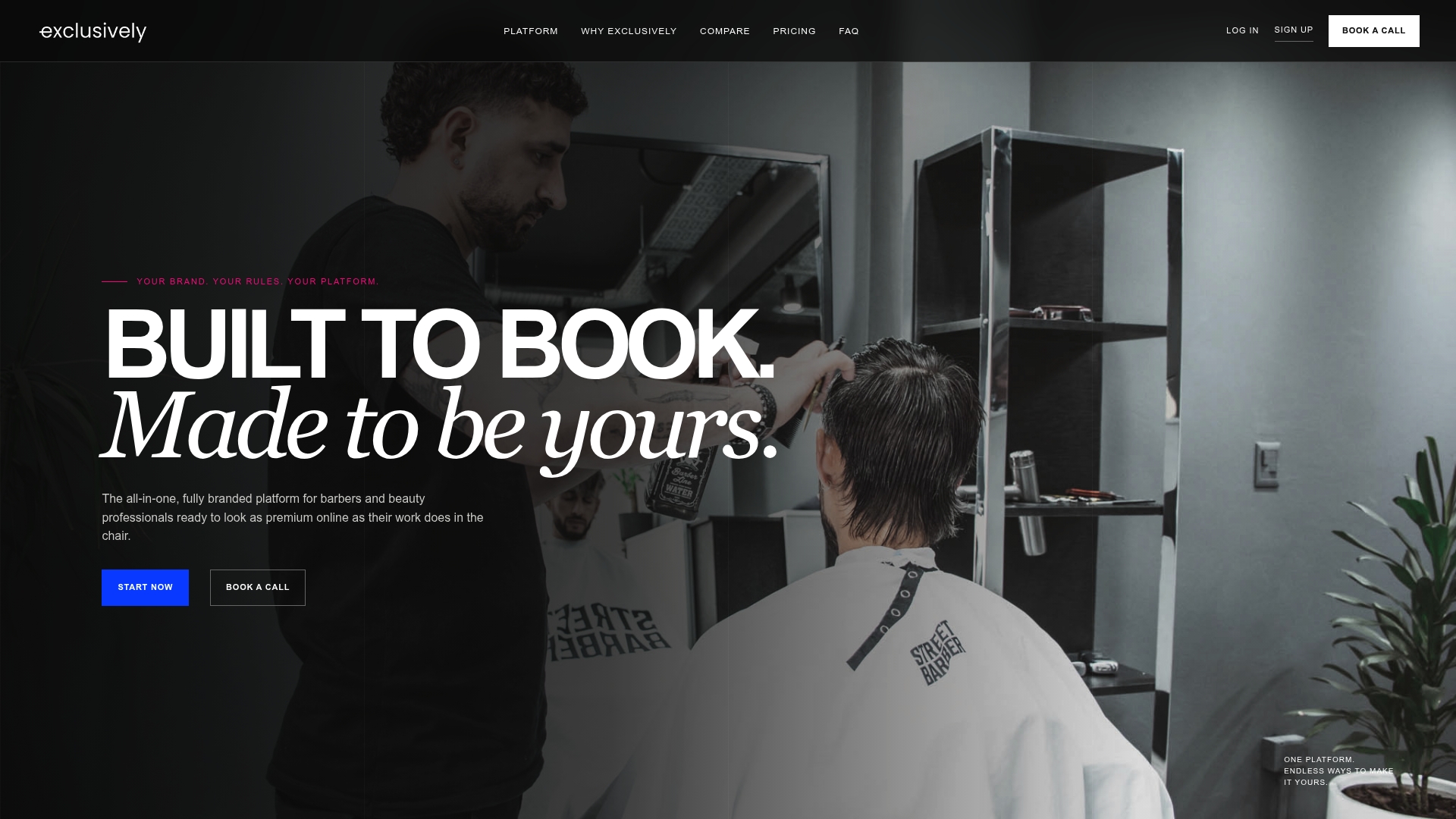
With Exclusively, your salon gets a custom website, integrated booking, and your own branded mobile app, all carrying your colors, type, and voice instead of a generic template. Individual providers keep control over their own pricing, availability, and service details within that same branded shell, so personality and central brand control coexist instead of competing. If you’re ready to see how the pieces fit together for your salon, check current plans and pricing to find the setup that matches where you are today.
FAQ
What should a salon brand guideline document include?
A practical salon brand guideline includes an identity summary, visual rules for logo and color, voice and messaging scripts, servicescape standards for the in-salon experience, ready-to-use templates, and a governance section naming who approves changes. Keeping it to a few pages encourages daily use rather than leaving it buried in a drive.
How does consistent branding affect client retention?
Consistent branding and coordinated communications support rebooking, since new-client retention averages around 30% while existing-guest retention typically ranges from 60% to 70%, and small gains in that rate can meaningfully boost profitability, according to Salon Today. Predictable service experiences and matching messaging across channels are what keep clients coming back.
How do I keep branding consistent across multiple stylists or locations?
Fix the elements that should never change, such as logo usage, service naming, and core color application, while allowing bios, portfolios, and personal statements to vary by provider. Review provider pages and additional locations regularly against your brand card to catch small deviations before they spread.
What’s the difference between a brand guideline and a style guide?
In practice, salon owners use the terms interchangeably to describe the same reference document covering identity, visuals, voice, and usage rules. The important distinction is length: a working document stays short enough for staff to check during a shift rather than a long manual nobody opens.
How often should I update my salon’s brand guidelines?
A quarterly review works well for most salons, checking visual assets, provider pages, and messaging against the brand card to catch drift early. Update the document whenever you add a service, open a location, or notice staff consistently working around a rule that no longer fits how the salon operates.
Sources
- The illusion of the logo, the promise of brand — Salon Today
- Brand Guidelines — Dow (Oct 2025)
- WordPress