
Salon Cancellation Policy: The Baseline Every Owner Should Set
Salon Cancellation Policy: The Baseline Every Owner Should Set
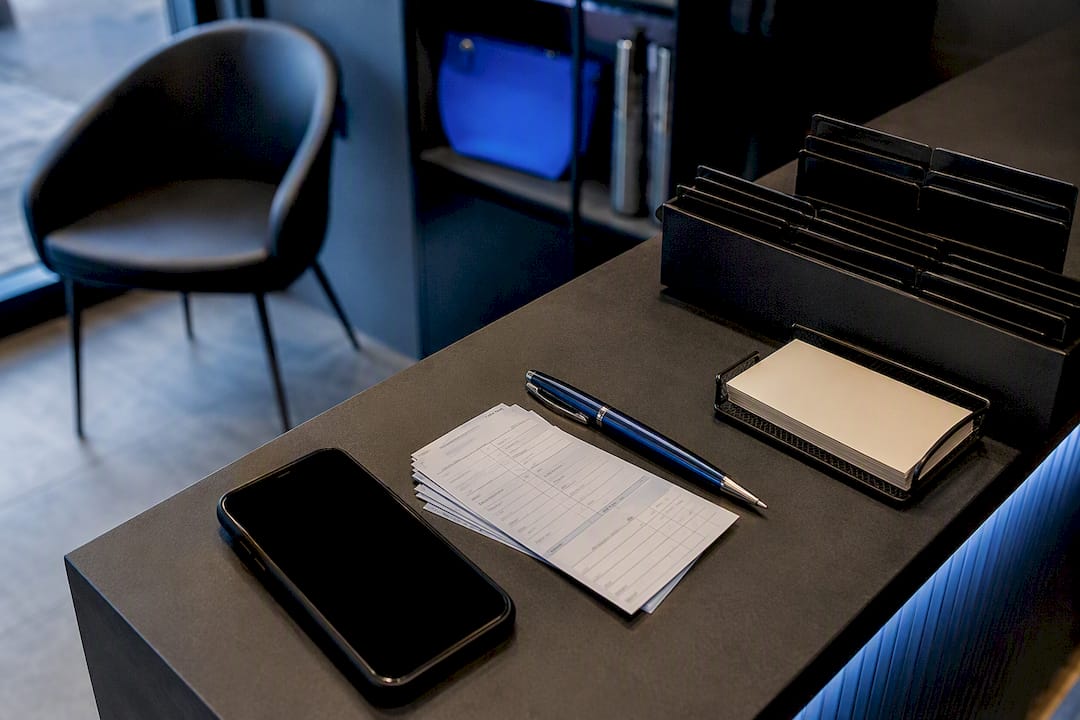
For high-value services like color corrections, extensions, or bridal packages, extend the window to 48 hours.
This isn’t about punishing clients. It’s about protecting the hour a stylist blocked off, the income tied to that hour, and the schedule everyone else depends on.
- 24-hour notice for standard services
- 48-hour notice for multi-hour or high-ticket appointments
- 50% fee for late cancellations, 100% for no-shows
- Card-on-file or deposit required at booking
Stat check: the standard industry structure charges 50% for late cancellations and 100% for no-shows, with 48-hour windows reserved for high-value bookings.
Key Takeaways
A salon cancellation policy protects revenue only when it pairs a clear notice window and fee structure with a validated payment method captured at booking.
| Point | Details |
|---|---|
| Set the baseline | Require 24-hour notice, charge 50% for late cancels and 100% for no-shows, and secure a card or deposit. |
| Extend for high-value services | Use 48-hour notice for color, extensions, and group or bridal bookings. |
| Automate reminders | Send confirmations at 3 days, 24 hours, and 2 hours to catch forgetfulness before it costs a chair hour. |
| Enforce on a ladder | Waive the first miss, charge partial on the second, full fee plus prepayment on the third. |
| Operationalize with the right platform | Getexclusively lets you present policy at booking and validate cards through Square or Stripe automatically. |
Table of Contents
- Why a Salon Cancellation Policy Protects Revenue and Staff
- What Every Salon Cancellation Policy Must Include
- How Much Should Late Cancellation and No-Show Fees Be?
- Setting the Right Notice Window for Each Service Type
- Card-on-File vs. Deposits: Which Secures Bookings Better
- Reminder Sequence: The Communication That Prevents Cancellations
- How to Enforce Your Cancellation Policy Fairly
- Copy-Paste Cancellation Policy Templates You Can Use Today
- Running the Policy Through a Branded Booking Platform
- What Actually Moves the Needle on Cancellations
- Put Your Cancellation Policy on Autopilot With Getexclusively
- Sources
Why a Salon Cancellation Policy Protects Revenue and Staff
A single no-show doesn’t just cost one client’s ticket. It costs the stylist’s guaranteed hour, the product pulled for that service, and often the walk-in who got turned away because the slot looked full. Multiply that across a 6-chair salon over a month and you’re looking at real, recoverable money walking out the door for no reason at all.
Predictable schedules also matter to your team beyond the paycheck. Stylists who build client relationships on commission or booth rent need reliable bookings to plan their week, and a salon that lets no-shows slide erodes that trust fast.
A cancellation policy only holds up if it’s backed by two things: a documented agreement the client accepted at booking, and a valid payment method on file. Without both, enforcement is just a suggestion.
That’s the legal hinge most owners miss. A policy posted on a website means little if nothing ties the client to it at the moment they booked.
What Every Salon Cancellation Policy Must Include
A policy that only lives on your website’s footer won’t hold up when you actually try to charge a fee. It needs to travel with the booking itself, get accepted at the point of scheduling, and use language specific enough that neither your front desk nor your client can argue about what it meant.
Here’s what has to be in there, in order of importance:
- The notice window, stated in hours and tied to the client’s local time zone if you serve a broad area.
- Exact fees, in dollars or percentages, for late cancellations and no-shows, not vague language like “a fee may apply.”
- How the booking is secured, whether that’s a card-on-file authorization or an upfront deposit, and where that charge will actually post.
- Clear definitions for late cancellation, no-show, and late arrival, since these are the terms clients will dispute.
- Group booking rules, since a bridal party or event booking carries different risk than a single haircut.
Beyond the numbers, your policy needs plain-language definitions everyone can point to:
- Late cancellation: canceled inside the notice window but before the appointment time
- No-show: no cancellation and no arrival within the grace period
- Late arrival: arriving after a set grace period, often 15 minutes, which may shorten or forfeit the service
Capture agreement twice: once as a checkbox at booking, and again as a line in the confirmation email or text. That second touch is what you’ll point to if a client claims they never saw the terms.
Pro Tip: Keep your checkbox language to one sentence. A wall of text at checkout gets skimmed, not read, and skimmed terms are weak in a dispute.
How Much Should Late Cancellation and No-Show Fees Be?
Most salons land in a fairly narrow band, and there’s a reason the range holds steady across markets: go too low and the fee doesn’t change behavior, go too high and you lose bookings to competitors with looser terms.
- Late cancellation fee: 25% to 50% of the service price
- No-show fee: 50% to 100% of the service price
- Group or event deposit: 25% to 50% of the total booking, collected upfront
The 50%/100% split is the most common structure in the industry, and it works because it scales with the actual loss. A missed $40 blowout costs you less than a missed $200 color service, so a flat $20 fee undercharges on one and overcharges on the other.
Flat fees make more sense for low-cost, high-volume services like brow waxes or quick trims, where the math is simple and clients expect a fixed number. Percentage-based fees make more sense once you’re above roughly 60 to 90 minutes of chair time, because that’s where the revenue at risk actually justifies the added complexity. Tiering your fees by service length or price point keeps the policy proportional instead of one-size-fits-all.

Setting the Right Notice Window for Each Service Type
Not every appointment carries the same risk, so your notice window shouldn’t either. A missed 30-minute trim is easy to refill from a waitlist. A missed 3-hour color correction almost never gets backfilled on short notice.
- 24 hours: standard cuts, blowouts, single-process color, most walk-in-refillable services
- 48 hours: multi-hour color, extensions, chemical treatments, and any group or bridal booking
- 4 to 6 hours: same-day bookings, clearly stated at the moment the client books
Keep it to two or three tiers at most. The moment your front desk has to check a chart to remember which service falls under which window, the policy becomes a source of confusion instead of clarity, and that confusion is exactly what clients exploit when they push back on a fee.
Card-on-File vs. Deposits: Which Secures Bookings Better
Card-on-file is the lower-friction option, and it’s the right default for most standard bookings. The client enters a card once, you validate it at the time of booking, and the fee posts automatically if they no-show. Requiring card validation at booking has been linked to meaningfully lower no-show rates compared to policies with no payment method on file at all.
Deposits make more sense for higher-risk bookings: bridal parties, multi-person group appointments, or new clients booking a premium service for the first time. The trade-off is friction. Asking for money upfront before a service exists can cost you a booking that a simple card hold wouldn’t.
- Confirm card validity during the booking process
- Apply deposits primarily to group bookings, events, or initial premium bookings
- Maintain records of booking confirmations and client agreement to policies
Pro Tip: Keeping digital records of accepted booking terms can help resolve disputes efficiently by providing proof of client agreement.
Reminder Sequence: The Communication That Prevents Cancellations
Most no-shows aren’t defiance, they’re forgetfulness. A tight reminder cadence catches that before it costs you a chair hour.
- 3 days before: a confirmation message asking the client to reply or tap to confirm.
- 24 hours before: a reminder with a one-tap reschedule link if plans changed.
- 2 hours before: a final text nudge, especially useful for morning or same-day slots.
Salons running this 3-touch sequence see measurably fewer no-shows than those sending a single reminder. Automating it through your booking system means your front desk only steps in for the genuine exceptions, not for chasing every appointment on the books.
How to Enforce Your Cancellation Policy Fairly
Enforcement only works if it’s consistent, and consistency requires a system rather than a judgment call every time. A graduated ladder protects goodwill on the first mistake while making clear that repeated misses have consequences.
- First incident: waive the fee, log it, and send a friendly reminder of the policy.
- Second incident: charge the standard partial fee for a late cancellation.
- Third incident: charge the full no-show fee and require prepayment for all future bookings.
Once a client hits the prepayment tier, say so plainly and politely: future appointments require payment upfront due to their booking history. Log every incident in your system so the next staff member handling that client sees the same history you do, rather than starting the conversation from scratch.
Copy-Paste Cancellation Policy Templates You Can Use Today
Pick the tone that matches your client base. All three share the same structure: notice window, fee, and payment method required.
- Gentle: “We ask for at least 24 hours’ notice to change or cancel your appointment. Late changes may include a fee to help us compensate our stylists for reserved time.”
- Standard: “Cancellations made less than 24 hours before your appointment are charged 50% of the service price. No-shows are charged the full service price. A card on file is required to book.”
- Firm: “All bookings require a valid card on file. Cancellations inside 24 hours are charged 50%; no-shows are charged 100%. Repeat no-shows require prepayment for future bookings.”
For the booking checkbox itself, keep it condensed: “I agree to the cancellation policy: 24-hour notice required, fees apply for late changes or no-shows.”
Add a lateness clause and a group clause separately: arrivals more than 15 minutes late may be shortened or treated as a no-show, and group bookings of three or more require 72 hours’ notice and a non-refundable deposit of 25% to 50%.
Running the Policy Through a Branded Booking Platform
Wording only works if clients actually see it and staff can enforce it without friction. That’s where the booking flow itself matters as much as the policy text.
- Present your cancellation terms directly inside a branded booking flow, not buried on a separate page clients skip past.
- Validate cards through integrated Square or Stripe processing so fees capture automatically instead of requiring a manual call.
- Automate the 3-day, 24-hour, and 2-hour reminder sequence so front desk staff only manage true exceptions.
Pro Tip: Use step-by-step help videos to train new front desk staff on fee enforcement in minutes instead of relying on tribal knowledge that changes with every hire.
What Actually Moves the Needle on Cancellations
Most advice on this topic treats the policy document as the whole solution. It isn’t. The wording matters less than most owners think, and the enforcement mechanism matters more. A beautifully worded policy that lives only on a website footer changes nothing, because nobody reads footers before booking a haircut.
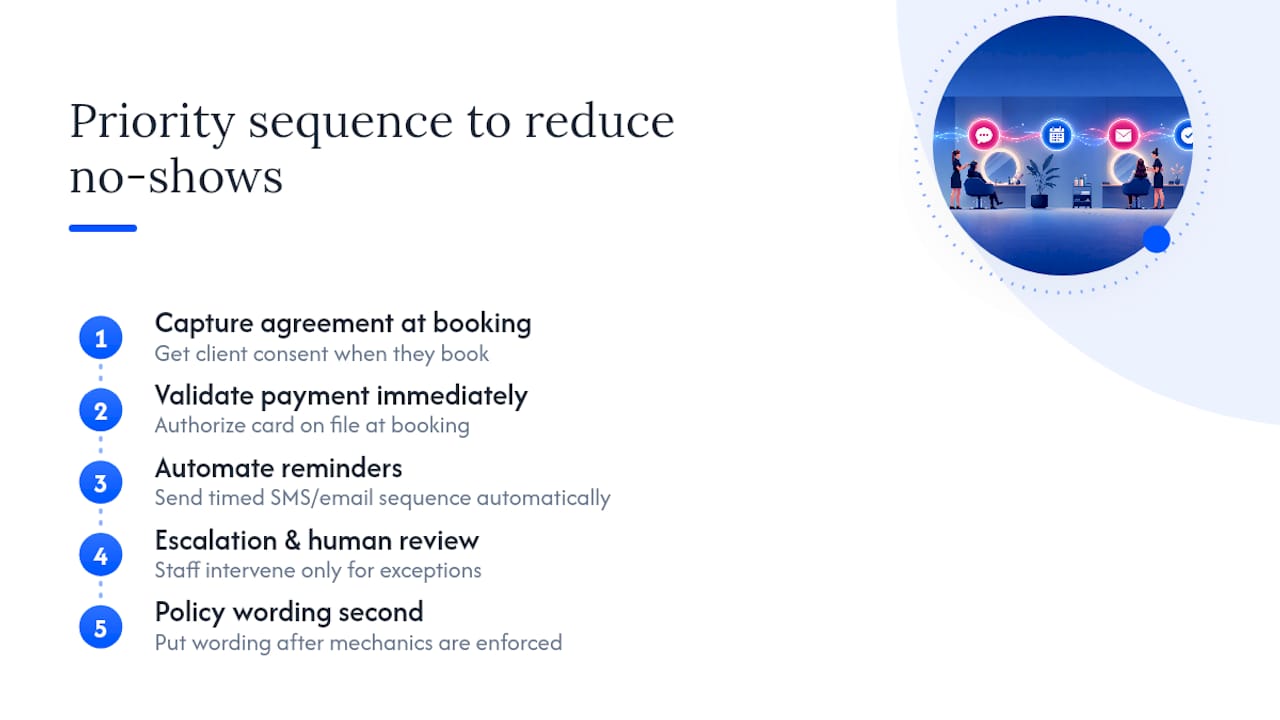
What the research actually supports is narrower and more useful: capture agreement at the moment of booking, validate a payment method immediately, and automate the reminder sequence so a human only intervenes for genuine exceptions. Owners who focus their energy on writing the perfect firm-tone paragraph are solving the wrong problem. The client who no-shows didn’t skip reading your terms, they simply forgot, and no clause fixes forgetting.
Prioritize the mechanics first: card validation, automated reminders, a consistent escalation ladder. Write the wording second. A mediocre policy backed by a system that actually enforces it beats a perfect policy nobody ever sees.
— Service
Put Your Cancellation Policy on Autopilot With Getexclusively
Writing the policy is the easy part. Getting it in front of every client, validating their card, and collecting the fee without a phone call is where most salons fall apart. Getexclusively is built for exactly that gap: your own branded booking flow presents your cancellation terms at the moment a client books, not buried on a page they never visit.
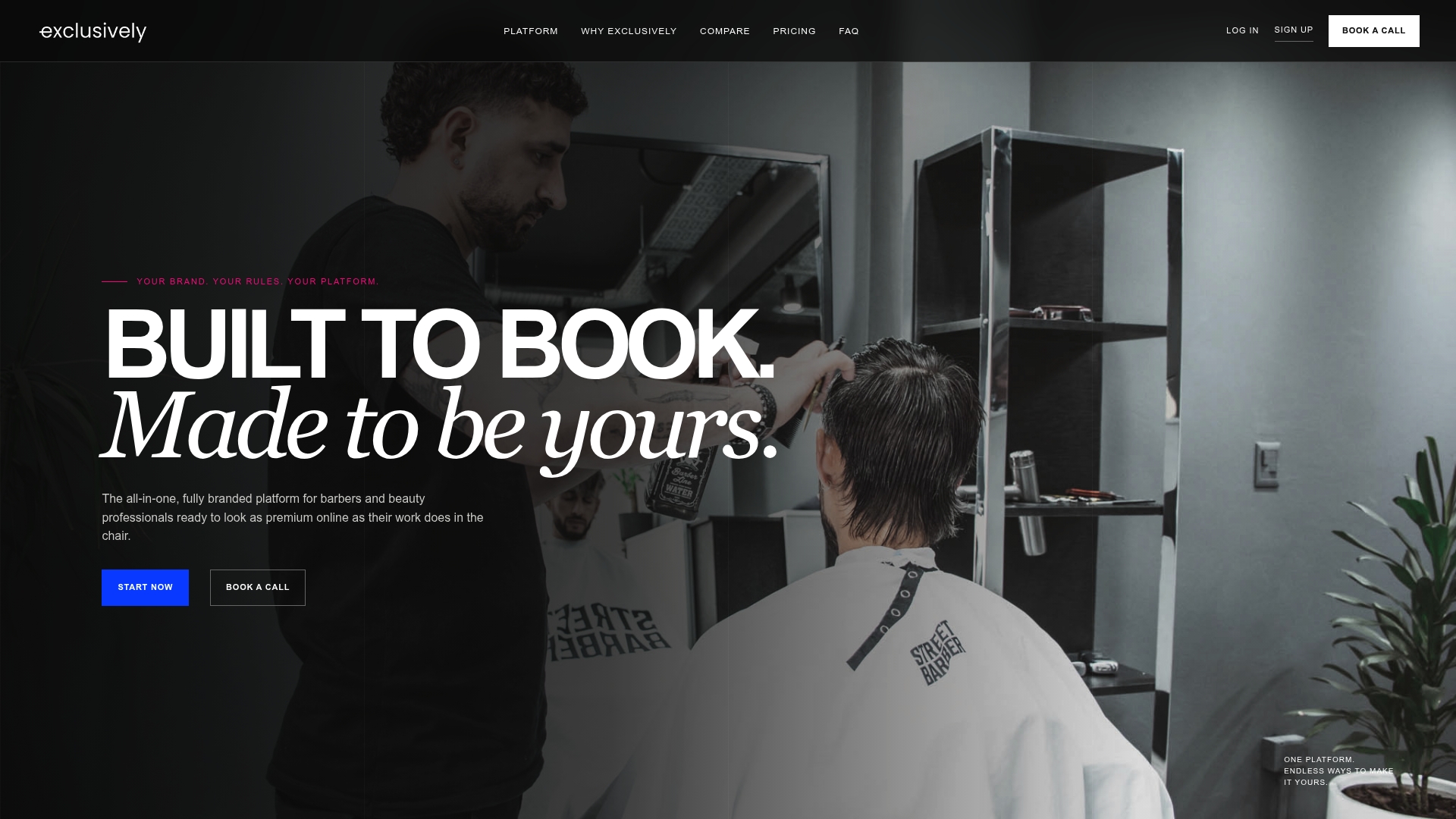
Card validation runs through integrated Square payment processing, so a no-show fee captures automatically instead of requiring an awkward call to the client. Reminder sequences run on autopilot, and your booking checkbox records exactly when each client accepted your terms, which matters the moment a fee gets disputed.
If you’re ready to stop chasing no-shows manually, check Exclusively’s pricing and see how a branded booking system handles enforcement for you.
Sources
- 6 Salon Cancellation Policy Examples Free Template — The Salon Business
- Salon No-Show Policy: 4 Copy-Paste Templates, Gentle to Firm | Regulr
- Salon Cancellation Policy Template (Free) | Keptbookings
- No-Show Policy Wording: Templates for 4 Business Types | Reservio Blog