
Salon Intake Forms: A Complete Setup Guide for 2026
Salon Intake Forms: A Complete Setup Guide for 2026

Use a customizable, fillable intake form and require it before the client sits in your chair. That single habit fixes two problems at once: it eliminates the ten minutes of chair-side small talk that eats into your schedule, and it catches an allergy or an incompatible chemical history before you touch a bottle of product.
A working salon intake form needs five non-negotiable pieces: contact and appointment details, the service requested, hair or skin history, allergy and medication disclosure, and a signed consent line. Anything beyond that is optional polish.
- Contact info and booking reference
- Service requested plus stylist preference
- Hair, skin, or scalp history (recent chemical work, current condition)
- Allergies, medications, and patch-test history
- Consent statement with signature and date
Pro Tip: A form that takes longer than three minutes to complete gets abandoned. Trim it to what actually changes how you perform the service, and push everything else to an optional “extras” section.
TL;DR:
- Keep the core five fields—contact info, service requested, hair or skin history, allergies, and consent—short and directly relevant to service decisions.
- Send the form immediately after booking or embed it on the confirmation page to maximize completion rates before client arrival.
- Use conditional logic to show only service-specific questions, reducing form length and client frustration.
- Review submissions daily to identify allergy or patch-test needs and flag potential issues before the appointment begins.
- Consider branded platforms like Getexclusively to streamline intake, payment, and record-keeping within a customized client experience.
Table of Contents
- What Should a Salon Intake Form Include?
- How Should You Deliver and Collect the Form?
- Copy-Paste Field Groups for Common Salon Services
- What Consent Language Actually Needs to Say
- Best Practices for a Fast, Reliable Intake Workflow
- How Getexclusively Handles Branded Intake Forms
- Keeping Your Intake Forms Current
- What Actually Moves the Needle Here
- Get Your Branded Intake Workflow Running
- Key Takeaways
- Sources
What Should a Salon Intake Form Include?
A complete salon intake form captures contact details, the service requested, hair and scalp history, prior chemical treatments, known allergies, and a signature line. That’s the baseline. Beyond it, the fields you add should map directly to what changes your technique or your product choice.
Build the form in this order, since it mirrors how a stylist actually thinks through a new client:
- Contact and appointment identifiers. Name, phone, email, and the booking reference so the form links back to the calendar entry automatically.
- Service requested and stylist preference. This determines which conditional questions the client sees next.
- Hair and scalp history. Recent color, keratin treatments, relaxers, or extensions, plus a plain description of current condition (dry, damaged, previously bleached).
- Allergies, medications, and patch-test history. Ask specifically about reactions to ammonia, PPD, or fragrance, not just “any allergies?”
- Consent and signature. Date-stamped, tied to the specific service booked.
Once those five are locked in, a few optional fields add real value without bloating the form for every client:
- Inspiration photo upload for color or cut requests
- Pronouns and preferred name
- Marketing and rebooking opt-in checkbox
- Referral source (helps track which channels bring in new clients)
Skip the temptation to make everything required. A salon client intake form built for a haircut shouldn’t force a client through eight fields meant for a balayage appointment. That mismatch is the single biggest reason completion rates drop.
How Should You Deliver and Collect the Form?
You have three real options: a fillable PDF, an embedded web form, or a link sent through your booking confirmation. Each fits a different kind of shop, and the choice mostly comes down to how much automation you already have.
- Fillable PDF. Cheap to set up, works on any device, but someone has to manually re-enter the data into your client record. Fine for a solo stylist with a small book.
- Embedded web form. Lives on your booking page or confirmation screen. Clients fill it out where they already are, and submissions can flow straight into a CRM or spreadsheet.
- In-app or booking-link delivery. Sent automatically the moment a client books, with a reminder 24 to 48 hours before the appointment.
The timing matters more than the format. Digital intake forms shared immediately after booking, or embedded right on the confirmation page, get completed before arrival far more reliably than a form handed over at check-in. If your system supports conditional logic, use it. Color clients see color-history questions; a client booking a simple trim never does. That alone can cut the form’s perceived length in half.
Pro Tip: If your booking software supports e-signatures, use them instead of a printed signature line. It removes the awkward “sign this while I walk you to the chair” moment entirely.
Copy-Paste Field Groups for Common Salon Services
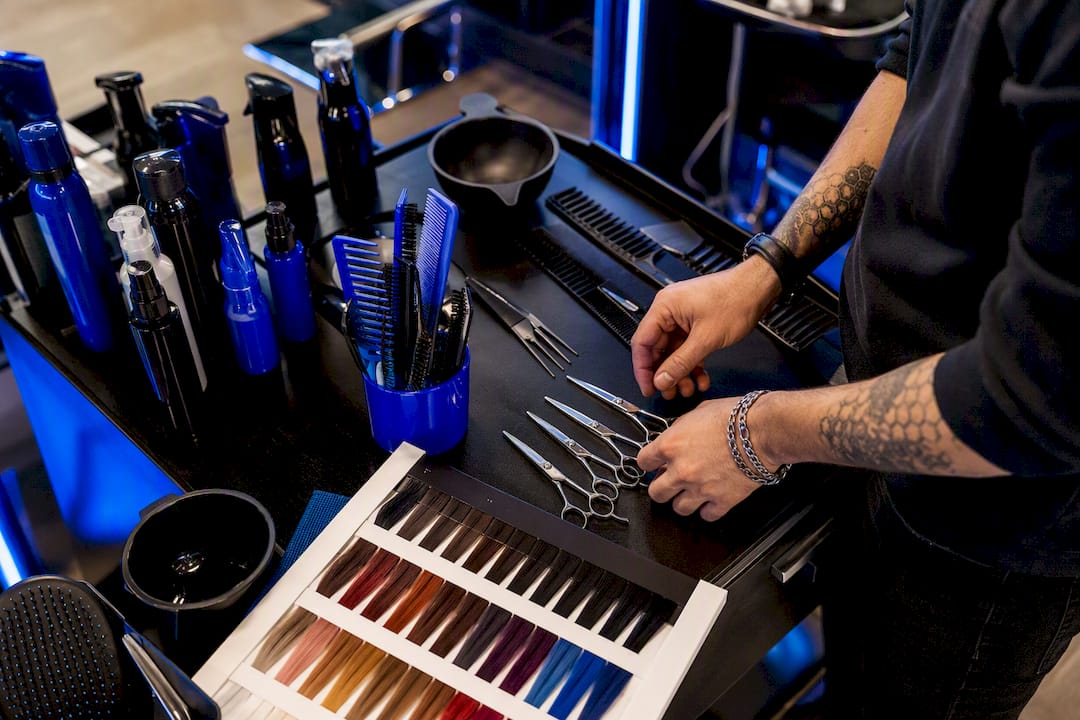
Rather than building one generic form and hoping it fits every appointment type, keep a handful of field groups you can mix and match. Here’s a starting set.
New client baseline (every service starts here):
- Contact info and booking reference
- Service requested
- General hair or skin condition
- Allergy and medication disclosure
- Consent and signature
Color or chemical treatment add-on:
- Date of last chemical service
- Product or brand used previously, if known
- Patch-test confirmation (yes/no, with date)
- Scalp sensitivity or known reactions
Capturing the last chemical service date and product used isn’t busywork. It tells the stylist how to time processing and avoid layering incompatible chemicals on hair that’s already been through a keratin treatment or a box dye.
Extensions-specific fields:
- Current extension method, if any (tape-in, sew-in, fusion)
- Maintenance history and last removal date
- Hair thickness and density notes
Lash or skin service prechecks:
- Contact lens use
- Known sensitivities to adhesives or specific skincare actives
- Recent retinol, exfoliant, or peel use
Sample consent line to adapt: “I confirm the information above is accurate to the best of my knowledge and understand that undisclosed allergies or prior chemical treatments may affect the outcome of my service.”
What Consent Language Actually Needs to Say
Signed consent matters most for chemical services, where an undisclosed allergy or drug interaction can cause a real reaction, not just a bad haircut. Salon software resources consistently point to collecting health and allergy history as the step that protects both the client and the stylist.
Keep the wording factual and client-acknowledging. Don’t write “this treatment is guaranteed safe.” Write something closer to: “I have disclosed all known allergies and prior chemical treatments, and I understand the stylist will proceed based on this information.”
- State what the client is confirming, not what you’re promising
- Capture a signature or e-signature tied to the date and specific service
- Store a checkbox for patch-test completion when relevant
- Have an attorney review your final consent wording before rolling it out shop-wide, especially for chemical or skin services
Best Practices for a Fast, Reliable Intake Workflow
The workflow around your form matters as much as the form itself.
- Send the intake link the moment the appointment is booked, then follow up with a reminder 24 to 48 hours out.
- Review submissions before the client walks in, and flag anything that needs a patch test or a product substitution.
- Update the client’s profile after every visit rather than starting from scratch next time.
- Use conditional logic so a simple blowout doesn’t trigger the same ten questions as a full color correction.
- Train front-desk staff to double-check allergy and consent fields at check-in, not just confirm the appointment time.
Pro Tip: Give one staff member ownership of reviewing incoming forms each morning. A form nobody reads before the appointment is just paperwork.
How Getexclusively Handles Branded Intake Forms
Getexclusively hosts and embeds intake forms directly inside a salon’s own branded website and mobile app, so the client never leaves your platform to fill out paperwork. Forms attach to booking confirmations, collect e-signatures, and store responses right on the client profile for the next visit.
- Embed forms on a custom branded website or send them through the branded app
- Capture e-signatures instead of relying on a printed consent line
- Connect intake data to Square payment processing for deposits tied to chemical or extension services
- Walk through setup with the booking help videos
The point of a branded intake workflow isn’t just looking polished. It’s that the client fills out one form, on one platform, that already has their booking and payment details attached. Nothing gets re-typed, nothing gets lost between apps.
Keeping Your Intake Forms Current
An intake form isn’t a document you build once and forget. Treat it the way you’d treat your service menu: something you revisit every few months based on what’s actually happening at the front desk.
Start by tracking where clients get stuck. If your booking software shows partial completions clustering at the same question, that field is either confusing or feels invasive. Cut it, reword it, or move it to optional.
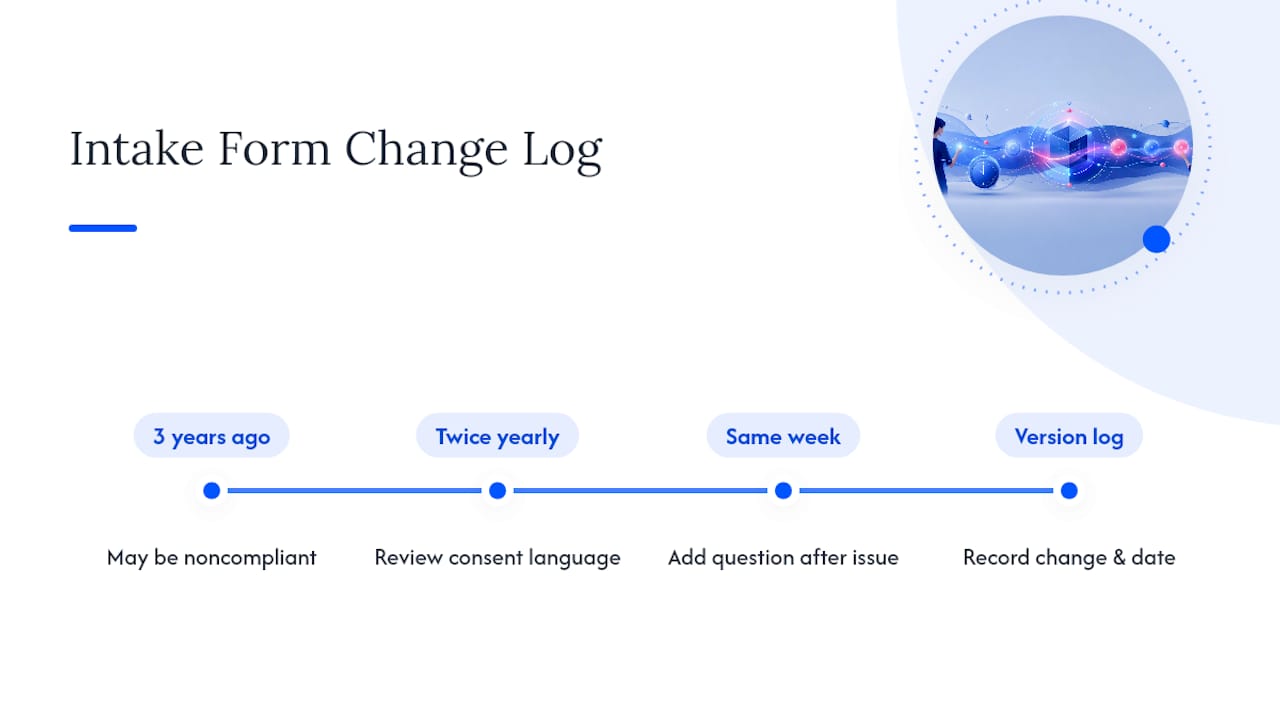
Regulatory shifts matter too, particularly around chemical services. States periodically update disclosure requirements for products containing formaldehyde-releasing agents or specific allergens, and a form written three years ago may no longer reflect current requirements. Set a recurring calendar reminder, twice a year works well, to review your consent language against current state cosmetology board guidance.
Staff feedback is an underused source of updates. The stylist who fields a reaction complaint or an awkward client conversation knows exactly which question was missing from the form. Build a simple habit: whenever something goes wrong during a service that the intake form should have caught, add that question to the form the same week, not at some vague future review.
Version your forms, too. Keep a simple log of what changed and when, especially for consent language, so if a dispute ever comes up you can show exactly what the client agreed to at the time of service. A form that never changes is usually a sign nobody’s actually reading the submissions.
What Actually Moves the Needle Here
Most advice on client paperwork focuses on making forms comprehensive. That’s backward. The salons that get the most value from intake forms treat them as a filtering tool first and a records tool second, asking only what changes a decision the stylist makes that day.
The conventional wisdom says “collect as much as possible in case you need it later.” In practice, that produces long forms clients abandon halfway through, which means you end up with incomplete data on the clients who most need a thorough history, like new color clients with unknown chemical backgrounds.
Prioritize in this order: get the five non-negotiable fields locked down first, get delivery timing right second (immediately after booking, not at check-in), and only then start layering in service-specific conditional questions. A shop that nails timing and the core five fields with a plain PDF will outperform a shop running a beautifully designed twenty-field form that nobody finishes before their appointment.
— Service
Get Your Branded Intake Workflow Running
The template routes covered above work, but they leave you stitching together a PDF, a booking calendar, and a separate e-signature tool. Getexclusively is the alternative to that patchwork: one branded platform where the intake form, the booking confirmation, and the payment step all live in the same client experience under your own name, not a generic booking app’s.
That matters most for shops running color, extension, or lash services where a missed allergy question or a lost consent form is an actual liability, not just an inconvenience. Because the form sits inside your branded mobile app or website, submissions land directly on the client’s profile, ready for the stylist before the appointment starts. Check the pricing page to see which plan fits your shop, and get your branded booking and intake workflow set up this week.
Key Takeaways
A reliable salon intake process combines a short, service-specific form with delivery timed to happen before the client ever sits down.
| Point | Details |
|---|---|
| Lock the five core fields | Contact info, service requested, hair/skin history, allergies, and signed consent cover most risk. |
| Send it right after booking | Forms delivered immediately after booking or embedded in the confirmation get completed before arrival more reliably. |
| Use conditional logic | Show color-history or extension questions only to clients booking those services to keep the form short. |
| Review before chair time | Check submissions each morning and flag allergy or patch-test needs before the client arrives. |
| Consider Getexclusively for full integration | Getexclusively embeds branded intake forms, e-signatures, and Square payments into one client-facing platform. |
Sources
- Salon Client Intake Form — Free AI Intake Generator | EZdoc
- Hair salon client intake form template | Typeform
- Free Salon Client Intake Form | PDF | Word — eSign
This article is general information, not a substitute for advice from a qualified doctor. Consult a qualified healthcare professional about your own circumstances before acting on anything here.