
Salon Pricing Psychology: 3 Cost Steps Before Testing Prices
Salon Pricing Psychology: 3 Cost Steps Before Testing Prices

Price psychology increases average ticket and repeat visits, but only when you first set a profitable cost floor. Before testing anchoring, tiers, or bundles, calculate your true cost per service, then layer in the behavioral tactics covered below. Start with three moves: know your numbers, build a tiered menu with a clear anchor, and test one bundle or membership offer at a time.
TL;DR:
- For a service costing $95, a 60% target gross margin sets a $237.50 price floor; calculate fixed overhead by billable hour first.
- Set routine service tiers 15% to 20% apart, widen gaps for more demanding work, and place decoys beside the tier you want clients to choose.
- Itemize bundles for clients comparing services, but present one simple price to reduce decision fatigue; sell memberships through priority access and convenience, not discounts alone.
- Give two to four weeks’ notice, explain each increase, phase changes by stylist tier, and offer loyal clients one visit at the old rate.
- Change one pricing variable at a time, then compare bookings, retention, revenue per client, and cancellations across at least two booking cycles.
Table of Contents
- Core price psychology principles salon owners can use
- Know your numbers: calculating true cost per service and margin
- Practical menu tactics: tiered pricing, bundles, add-ons, and membership models
- How to raise prices without losing clients
- Using salon tech to put pricing psychology into practice
- Practitioner perspective: realistic expectations for testing pricing changes
- How a branded platform speeds up pricing changes
- FAQ
- Sources
Core price psychology principles salon owners can use
Anchoring works by giving clients a reference point before they see your actual price. List a premium “VIP” or signature service first on your menu, and every other option looks more reasonable by comparison. This is also how the decoy effect operates: add a mid-tier option priced close to your premium tier but with fewer inclusions, and clients tend to pick the premium option because it looks like the better deal.
The price-quality heuristic matters more in services than in retail because clients cannot inspect a haircut before buying it. A higher price becomes a signal of skill, and social proof (reviews, before-and-after photos, stylist credentials) reinforces that signal. Charm pricing, ending a price at $99 instead of $100, tends to help on routine, price-sensitive services like a blowout. Round numbers can work better on premium experiential services, where they communicate investment rather than a bargain.
- Anchoring sets the reference price before a client evaluates your menu.
- The decoy effect nudges clients toward your most profitable tier.
- Memberships and bundles reduce the “pain of paying” by replacing per-visit sticker shock with a predictable charge.
A 2026 study of 360 beauty clinic consumers found perceived price fairness was the strongest predictor of repurchase intention, explaining about a third of the variance in whether clients came back.
Pro Tip: Put your highest-margin service at the top of a printed or digital menu; clients anchor on the first price they see, not the cheapest one.
Know your numbers: calculating true cost per service and margin
Psychological pricing only works on top of a correct cost base. Start by separating fixed costs (rent, utilities, software, insurance) from variable costs (product, commission, supplies specific to a service), then allocate fixed costs across your service menu based on average time spent.
- Add total monthly fixed costs and divide by total billable hours to get a fixed cost per hour.
- Multiply that hourly fixed cost by the time a service takes, then add variable product and labor costs for that service, to get true cost per service.
- Decide a target margin (many salons aim for 50 to 65% gross margin on service revenue) and divide true cost by (1 minus target margin) to get your retail price floor.
Say a balayage service costs $45 in product and commission and takes 2.5 hours, with a fixed cost per hour of $20. True cost comes to $45 plus (2.5 times $20), or $95. At a 60% target margin, the floor price is $95 divided by 0.4, which is $237.50.
Competing on price alone erodes margin on every booking. Setting a defensible floor first, then applying anchoring, tiers, and bundles to raise perceived value above that floor, protects profitability while still growing average ticket.

Practical menu tactics: tiered pricing, bundles, add-ons, and membership models
A Good/Better/Best structure gives clients an easy comparison and steers most bookings toward your middle or top tier. A common template: junior stylist pricing as your “Good” tier, senior stylist as “Better,” and a master stylist or signature service as “Best,” with each tier priced roughly 15 to 20% above the one below it for core services, widening the gap for more time-consuming or higher-skill work.

Decoys work best placed directly next to your target tier, priced close to it but missing one or two features, so the better option looks like an obvious upgrade. For bundles, show itemized pricing when clients are comparison-shopping individual services, but keep a bundle as one simple price when you want to reduce decision fatigue, since research on decoy and anchoring effects shows itemization can weaken a decoy’s pull.
Memberships work best when they bundle access and convenience, not just a discount: priority booking, a preferred stylist slot, or small per-visit savings framed as a perk rather than a markdown, a point L.E.K. Consulting’s research on beauty service pricing supports directly.
- Price tier gaps at 15 to 20% for routine services, wider for premium or time-intensive ones.
- Place a decoy option beside your target tier, not at the menu’s extremes.
- Keep bundles itemized for comparison shoppers, simple for convenience shoppers.
- Frame membership value around access and convenience, not discount alone.
Pro Tip: Change one variable at a time (tier price, decoy placement, or bundle framing) and run it for a full booking cycle before judging results.
How to raise prices without losing clients
Give clients advance notice, generally two to four weeks, and tie the increase to something concrete: new product lines, added training, or a longer appointment. A simple script works: “Starting next month, our pricing reflects [specific investment]; your next visit will be booked at the new rate.” Phase increases by stylist tier rather than applying one flat percentage across the board, and consider a loyalty-based retention offer, like locking in the previous rate for one more visit, for your most frequent clients.
- Announce the change with a value-linked reason, not just a date.
- Phase the increase by tier, starting with your highest-demand stylists.
- Offer a one-time retention bridge to your most loyal segment.
- Track booking volume, retention rate, revenue per client, and cancellation rate for at least two cycles after the change.
Perceived fairness is the strongest predictor of whether a client rebooks, according to the Auburn University study of beauty clinic consumers, which makes the reason you give for a price increase as important as the amount.
Using salon tech to put pricing psychology into practice
Provider-level pricing control lets each stylist’s tier show clearly on your booking page, so the Good/Better/Best structure is visible before a client picks a time slot. Our booking software lets you configure bundles and memberships directly in the system, with renewals and billing handled automatically once a client signs up.
- Display descriptive service names and stylist tiers directly on the booking page.
- Add reviews or before-and-after photos near higher-tier options to reinforce the price-quality signal.
- Connect Square or Stripe so membership billing runs automatically, reducing friction at checkout.
- Keep menu wording consistent across your website, app, and in-salon display.
Practitioner perspective: realistic expectations for testing pricing changes
Pricing changes rarely show their full effect in one cycle; for practical examples of setting pricing floors and evaluating quality signals, see our barbershop pricing quality comparison guide. Treat each test (a new tier, a decoy, a membership) as a small experiment with a before-and-after comparison, not a one-time decision. Pricing strategy also fails without a talent strategy behind it: a tiered menu only works if your senior stylists can deliver the experience the higher price promises, and salon-level research on customer revisit behavior ties repeat visits directly to stylist skill and salon atmosphere, not price alone.
— Service
How a branded platform speeds up pricing changes
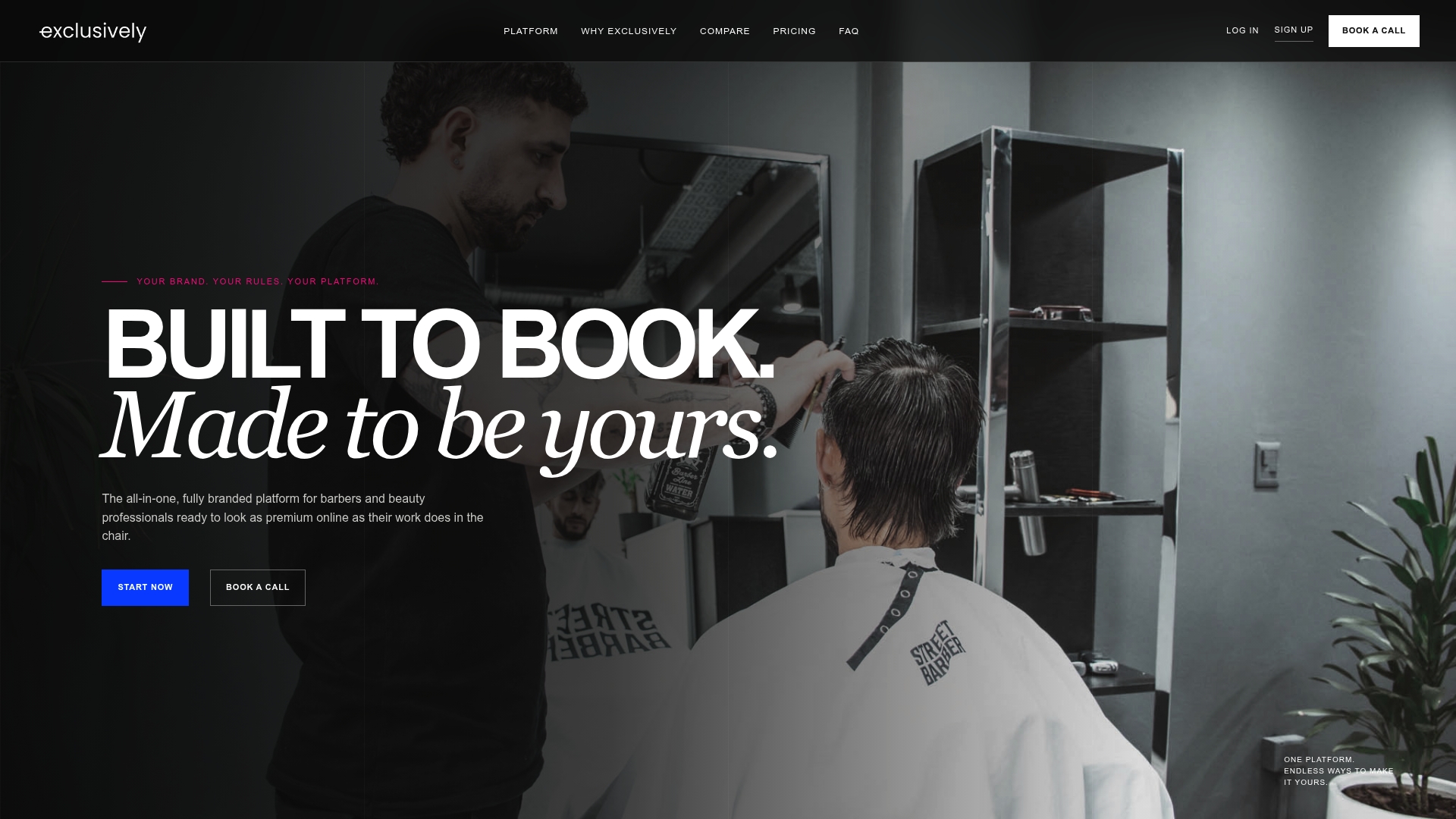
A branded website and booking system give you one place to control menu presentation instead of juggling spreadsheets, a booking app, and a separate payment processor. We built our platform so each stylist or location sets their own pricing, tiers, and service descriptions while your overall brand stays consistent across web and mobile.
- Centralize tiered menus, bundles, and memberships in one booking system instead of three separate tools.
- Keep pricing control at the provider level while maintaining one consistent brand across your website and app.
- Run membership billing through integrated payments without a separate subscription tool.
Plans start at $49 a month for a branded website, with booking and app options available as you grow; see current pricing or book a call to see how it fits your menu.
FAQ
What is the formula for calculating salon pricing?
Add your fixed cost per hour (total monthly fixed costs divided by billable hours) multiplied by service time, then add variable product and labor costs to get true cost per service. Divide that true cost by (1 minus your target margin) to get your retail price floor.
Can you give me an example of psychological pricing?
Listing a premium signature color service priced above a standard color on your menu is anchoring: it makes the lower-priced option feel more reasonable by comparison. Adding a mid-tier option with fewer inclusions right next to the premium tier is a decoy, designed to make the premium option look like the better value.
What are the three C’s of a pricing strategy?
Definitions vary, but a common version used in services pricing refers to cost, competition, and customer value: your true cost per service, what comparable providers charge, and what clients perceive the service is worth. Salon pricing works best when the cost floor is set first and customer-perceived value is layered on top through tiers, bundles, and framing.
How do price endings influence customer perception?
Prices ending in .99 tend to feel cheaper and work well on routine, frequent services like a basic haircut. Round numbers often signal quality and investment on premium or infrequent services, since research on pricing presentation shows the effect of price endings depends heavily on context.
Sources
- Auburn University ETD — study on price fairness and repurchase intention (2026)
- Not all beauty services are created equal — pricing strategies must reflect that | L.E.K. Consulting
- Anchoring decisions: the role of decoy pricing in consumer choices | International Hospitality Review (Emerald)
- On the Role of Skill, Quality, and Environmental Factors on Customer Behavior of the Beauty Industry