
Stylist Portfolio Page: 4 Essentials That Turn Browsers Into Bookings
Stylist Portfolio Page: 4 Essentials That Turn Browsers Into Bookings

A stylist portfolio page earns bookings when it pairs credited, recent work with a visible path to appointment time, not when it just looks polished. The four essentials are a portfolio organized by stylist, a service menu with honest pricing guidance, a booking call-to-action with real-time availability per stylist, and mobile-first pages that load fast. Get those four right and a visitor can go from scrolling to confirmed booking in a handful of taps.
TL;DR:
- Display recent, credited work with clear captions, and include a streamlined booking button integrated with related service and stylist details.
- Offer transparent pricing with exact rates for standard services and “from” pricing or ranges for complex work, alongside clear policy disclosures.
- Optimize mobile booking flows with short inputs, visible primary actions, and prefilled forms linked directly to stylist portfolios and real-time availability.
- Update portfolio images monthly or when significant changes occur, and ensure pricing, availability, and images stay synchronized to avoid misinformation.
- Use a platform built for stylist needs to manage branding, portfolio, booking, and payments, saving time and ensuring consistency across customer touchpoints.
Table of Contents
- Checklist: The Exact Items to Include on a Stylist Portfolio Page
- Layout Patterns and a Gallery-to-Booking Flow That Works
- Pricing and Service Menu Rules That Build Trust
- Booking Flow Design and Mobile Rules That Reduce Friction
- Maintenance: Who Owns Updates and What to Check
- Client Testimonials and Reviews to Build Trust
- Call-to-Action Buttons Beyond Booking
- SEO Best Practices Tailored for Stylist Portfolio Pages
- Showing Social Media Alongside the Portfolio
- Selecting and Sequencing Portfolio Images to Tell a Story
- Why a Focused Portfolio Wins Bookings
- A Branded Platform Built to Run These Patterns
- FAQ
- Sources
Checklist: The Exact Items to Include on a Stylist Portfolio Page
Before adding anything else to a stylist portfolio page, confirm these items are live and current. This list works as an audit for an existing page or a build list for a new one.
- Recent, credited before-and-after and finished-look photos with captions naming the stylist and the service performed.
- Service menu entries that show duration alongside an exact price or a clearly labeled starting price or range.
- A primary booking call-to-action placed near the top of the page and visible on mobile without scrolling.
- Short stylist bios covering specialties and general availability, plus a small, current set of client reviews.
- Documented image consent, compressed files, descriptive alt text, and lazy-loading so pages stay fast.
Skipping any one of these creates friction. A gorgeous gallery with no visible booking button just becomes inspiration a visitor saves and forgets. A service menu with no duration or price forces a phone call most people will not make. The goal is a page that answers a new client’s unspoken questions (who did this, how much, how long, can I get that time) before they have to ask.
Layout Patterns and a Gallery-to-Booking Flow That Works
The best stylist portfolio pages treat the gallery as a decision tool, not decoration. A filterable gallery, sorted by stylist and service type, lets a visitor narrow results to the exact look and the exact person who can recreate it. Featured looks belong above the fold, especially on mobile, since that is where most visitors form their first impression.
Clicking into a photo should open a detail view naming the service, the stylist, the expected duration, and price guidance, with a prominent “Book this look” button. That button should carry context forward instead of dropping the visitor into a blank booking form. This pattern shows up in real design work: one portfolio and booking case study describes gallery selections that prefill the style and stylist, then surface availability for that specific professional, so a visitor can move from photo to appointment without re-entering information. A related write-up on linking gallery images to booking context makes a similar point: a photo is more useful when its caption or metadata ties directly to the matching booking path.
A stylist subpage benefits from a consistent template:
- A headshot and short bio naming specialties.
- An availability snapshot showing the next few open slots.
- A featured strip of that stylist’s most recent portfolio work.
- A direct “Book [stylist name]” button.
The interaction, in sequence, looks like this: a visitor taps a gallery photo, a detail modal opens with service and stylist information, the booking form prefills with that selection, and the calendar shows real availability for that specific stylist.
Pro Tip: Name the booking button after the action, not the brand: “Book this look” converts better than a generic “Schedule” because it keeps the visitor’s intent in the label.
Pricing and Service Menu Rules That Build Trust
How you present a price matters as much as the price itself. Published guidance on salon pricing presentation recommends exact rates for standardized services and “from” pricing or ranges for variable work, with duration and inclusions spelled out either way.
- Publish exact prices for repeatable services like a standard men’s haircut or a basic blowout, and list what is included.
- Use “from” pricing or a range for transformation or corrective work, and name what changes the price, such as hair length, color correction, or extensions.
- Offer a short consultation booking path for complex services instead of a single number that will not hold up in the chair.
- Display deposit, refund, transfer, and rescheduling rules on the service page or checkout screen, not buried in a separate policy document.
A client who books a “from $85” color service and later learns a correction adds $120 feels misled even if the math was technically accurate. Naming the variables up front, length, existing color, desired result, turns a vague price into an honest estimate and sets the stage for a smoother consultation.
Booking Flow Design and Mobile Rules That Reduce Friction
Most stylist portfolio traffic arrives on a phone, which means the booking flow has to work as a thumb-friendly sequence, not a shrunk-down desktop form. Guidance on mobile-first conversion for small business sites points to short inputs and an early, visible primary action as the difference between a visitor who books and one who leaves.
- Keep the primary call-to-action visible on the first mobile screen, and design it to accept quick taps rather than long typing.
- Carry the stylist and service selection forward from the gallery into the booking form, and show availability for that specific stylist.
- Limit the booking form to date, time, name, and phone or email, using mobile-friendly input types like a date picker and a numeric keypad for phone numbers.
- Compress images, lazy-load the gallery, and avoid oversized hero photos so pages load quickly on mobile data.
- Label buttons by action and context: “Book now,” “Book Maria,” or “Request consultation” depending on how complex the service is.
Even small mobile speed improvements correlate with measurable gains in engagement and conversion, according to Think With Google’s research on page speed, which is a strong reason to treat image optimization as a booking feature rather than a cosmetic one. Test the entire flow, gallery tap through confirmation, on an actual phone before calling a page finished. An appointment system built around provider-level availability can handle the prefill and real-time calendar logic this flow depends on.
Maintenance: Who Owns Updates and What to Check
A stylist portfolio page is only as trustworthy as its last update. Refresh imagery monthly or whenever a stylist’s visible work changes meaningfully, and remove dated stock photography or low-quality shots that undercut the rest of the page. Keep service durations, prices, and staff availability synchronized with the booking calendar, since a page that shows an open slot that is not actually open does more damage than a plain page that is accurate.
- Store image consent records, name and compress files consistently, and run a simple upload-and-approval step before any new photo goes live.
- Run a QA pass on staff phones covering booking, rescheduling, deposit handling, and confirmation notifications.
- Assign one person, often the shop owner or a designated stylist, as the content owner responsible for monthly reviews.
Guidance on website maintenance and ownership points to a lightweight workflow: automated compression at upload, a simple approval step for stylist-submitted photos, and a monthly reminder to review the portfolio and service menu together.
Pro Tip: Put the monthly review on a recurring calendar invite for the shop owner, not a mental note. Pages that drift out of date usually do so because no single person owns the task.
Client Testimonials and Reviews to Build Trust
A first-time client scanning a stylist portfolio page is looking for proof that other people had a good experience, not just good-looking photos. A small, current set of reviews placed near the relevant stylist’s bio or service listing does more for trust than a generic testimonials page buried in the site navigation.
Place reviews where they answer the exact question a visitor is asking. A review mentioning a specific service, like a balayage or a fade, belongs next to that service’s listing rather than in an undifferentiated wall of quotes. Attribute reviews to a first name and, where possible, the service received, since specificity reads as more credible than a vague five-star rating with no context.
Keep the set small and current. Ten recent, relevant reviews outperform fifty old ones that no longer reflect the current team or pricing. When a stylist leaves or a service menu changes, review and prune the testimonials tied to that person or service so the page never implies availability or pricing that no longer exists.
Reviews work best as reinforcement at the decision point, not as a separate stop on the journey. A testimonial sitting next to the “Book this look” button, tied to that specific photo or service, nudges a hesitant visitor at the exact moment they are deciding.

Call-to-Action Buttons Beyond Booking
Not every visitor is ready to book. Some want more information first, and a page that only offers “Book Now” loses them. A secondary call-to-action, like a contact form or a consultation request, captures that intent instead of letting it leave the page entirely.
A consultation request works especially well for complex services such as color correction or extensions, where a flat booking slot does not fit the conversation that needs to happen first. Label it honestly: “Request a consultation” sets different expectations than “Book now,” and clients appreciate the accuracy.
A simple contact form, asking for name, preferred contact method, and a short note about what they are looking for, gives hesitant visitors a lower-commitment path forward. Place it near the stylist bios or at the bottom of the service menu, where someone who has read through options but has not committed to a specific service is likely to be.
Keep secondary CTAs visually distinct from the primary booking button so the hierarchy stays clear. A visitor should always know which button is the fastest path to an appointment and which one is for questions first.
SEO Best Practices Tailored for Stylist Portfolio Pages
A stylist portfolio page ranks when it answers the specific questions a local searcher types in, like a service name paired with a neighborhood, rather than generic phrases like “hair salon.” Name services precisely in headings and captions: “balayage specialist in [city]” performs better in search than “color services.”
Image alt text matters twice over for this kind of page. It helps search engines understand what each photo shows, and it supports accessibility for visitors using a screen reader. Describe the service and stylist in the alt text rather than leaving it blank or stuffing it with keywords.
Structured, consistent stylist subpages, each with a unique URL, bio, and portfolio strip, give search engines distinct pages to index instead of one crowded page competing with itself. Keep page titles and headings specific to the stylist and service combination each page covers.
Fast-loading pages also carry an SEO advantage, since page speed is a known ranking factor, and the same compression and lazy-loading practices that improve booking conversion also help search visibility. A page that is slow because of oversized gallery images loses on both fronts at once.

Showing Social Media Alongside the Portfolio
Many clients check a stylist’s Instagram or TikTok before they check the booking page, so linking those profiles directly from the portfolio page closes a gap instead of sending visitors away to search on their own. Embed a small, recent feed or link clearly to each stylist’s professional account rather than a single generic shop account, since the stylist’s own feed usually shows a broader, more current range of work.
Keep the embedded feed light so it does not slow the page down. A static grid of recent posts, refreshed periodically, usually loads faster than a live embedded widget and still gives visitors the social proof they are looking for.
Make sure the work shown on social media and the work shown on the portfolio page stay consistent. A visitor who sees striking color work on Instagram but finds only basic cuts on the booking page will feel like the portfolio undersells the stylist, which undermines the trust the social presence built in the first place.
Selecting and Sequencing Portfolio Images to Tell a Story
A strong portfolio does not just show finished looks, it shows a sequence that builds a visitor’s confidence. Open with a stylist’s strongest, most representative work, the image that best captures their specialty, rather than burying it several rows down.
Group images by service type or technique so a visitor exploring “balayage” sees a consistent run of related work rather than a single photo surrounded by unrelated styles. Within each group, lead with variety: different hair lengths, textures, and starting points show a stylist can adapt a technique rather than repeat one formula.
Before-and-after pairs work best shown together, side by side or in a single swipeable frame, so the transformation reads clearly without requiring the visitor to scroll back and compare. Avoid mixing too many before-and-after pairs with single finished shots in the same row, since the inconsistent format slows visual scanning.
Retire images that no longer represent current skill level or that use outdated styling trends. A portfolio frozen in a previous year’s aesthetic signals a stylist who has not kept up, even if their current work is stronger than what is shown.
Why a Focused Portfolio Wins Bookings
Linking portfolio proof directly to booking removes the extra step that costs most stylist pages their conversions. When a client can see the exact work, confirm the price range, and reach a specific stylist’s calendar in one motion, hesitation drops. The pages that convert well are rarely the most elaborate ones. They are the ones that remove every unnecessary step between inspiration and a confirmed appointment.
— Service
A Branded Platform Built to Run These Patterns
Building and maintaining everything in this guide, stylist subpages, gallery-to-booking flows, provider-level availability, and mobile performance, takes real ongoing work if done from scratch. A platform purpose-built for barbers and beauty professionals handles that infrastructure so the stylist’s time goes into the work itself, not the website.
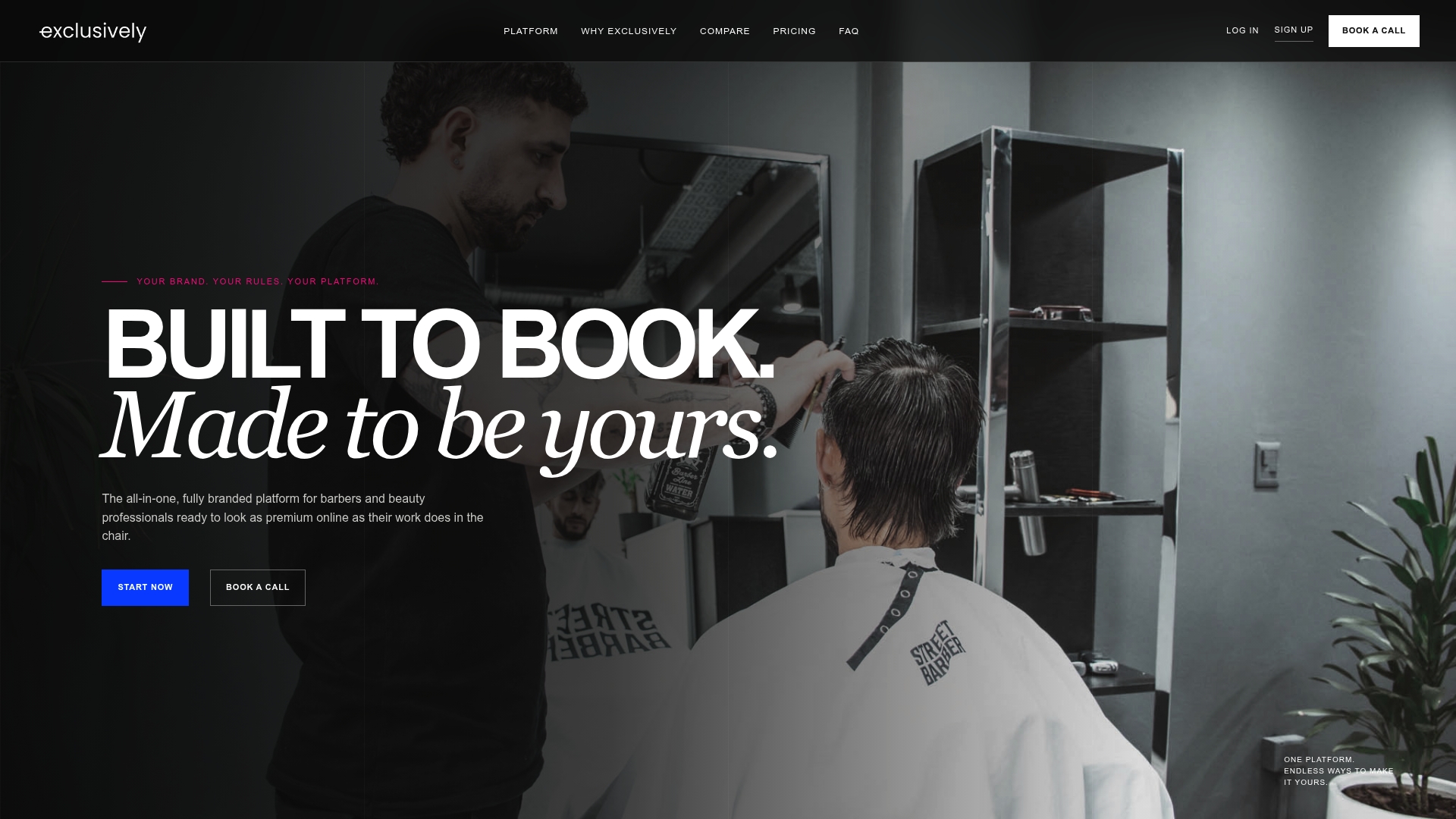
Our platform gives each professional or shop a fully branded presence built around the exact patterns covered here:
- A branded website with stylist-organized portfolios and mobile-ready performance.
- Provider-level booking with real-time availability per stylist, prefilled from portfolio selections.
- Square payment integration for deposits and checkout.
- Branded iOS and Android apps for shops that want a native mobile presence.
We offer three plans built around how much of this you want managed for you, with details available on our pricing page. This is one practical way to put the checklist in this guide to work without building the system piece by piece yourself. Book a call to see which plan fits your shop.
FAQ
What should a stylist put on their portfolio page first?
Lead with the strongest, most representative example of a specialty, credited to the stylist who did the work, paired with a visible way to book that same look. The goal is to answer “who did this and can I book them” within the first screen a visitor sees.
Should I list exact prices or price ranges on my stylist page?
List exact prices for standardized, repeatable services, and use “from” pricing or a range for variable work like color correction or extensions, naming what changes the price, following guidance on pricing presentation for salon sites. Pair range-based services with a consultation booking option instead of one misleading number.
How often should I update my stylist portfolio photos?
Refresh portfolio images monthly or whenever a stylist’s visible body of work changes meaningfully, and remove outdated or low-quality shots promptly. Keeping images, prices, and availability synchronized with the actual booking calendar matters as much as adding new photos.
Does page speed really affect whether clients book?
Yes. Small improvements in mobile page speed are associated with measurable gains in engagement and conversion, according to Think With Google’s analysis of speed and conversion, which makes image compression and lazy-loading practical booking tools, not just technical housekeeping.
What is the easiest way to set up a branded booking system without building one myself?
A managed platform built for barbers and beauty professionals, like our plans at Exclusively, handles the branded website, stylist-level booking, and payment integration together, starting at $49 per month for the website tier according to our pricing page. That route skips the work of wiring a portfolio, booking system, and payments together separately.
Sources
- Beauty Salon Website Guide 2026: Bookings, Deposits & Growth | Vezra
- House of Renewal | Danielle Johnson’s Portfolio
- CRO for Small Business Websites in 2026 | Tocayo
- Milliseconds make millions — Think With Google